Bienvenue sur notre blog Nous sommes un fabricant professionnel spécialisé dans les systèmes de tuyauterie haute performance en PVC et PP-R, fournissant des solutions intégrées pour l'ingénierie municipale, les infrastructures de construction et les applications résidentielles d'eau chaude et froide dans le monde entier.
👉 Suivez-nous sur Facebook pour les dernières mises à jour de produits, les informations techniques et les cas de projets réels.
👉si vous avez des exigences de projet ou avez besoin d'un devis, n'hésitez pas à le faire contactez notre équipe pour une réponse rapide et des solutions de pipeline personnalisées.
Veuillez continuer à lire notre blog pour plus d'informations sur l'industrie, d'expertise en ingénierie et d'innovations de produits dans les systèmes de tuyauterie avancés.
Table des matières
Introduction
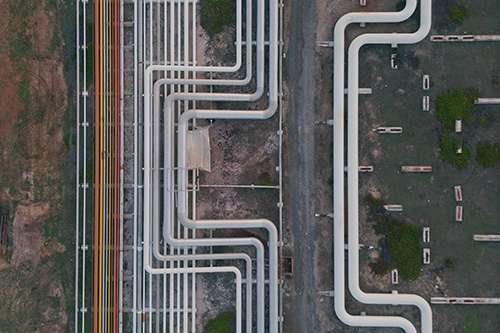
L'infrastructure mondiale est en transition de matériaux structurels Selon 2025 rapports internationaux d'ingénierie de pipeline 2026, plus 62% de nouveaux projets de pipelines municipaux en Asie et au Moyen-Orient spécifient désormais des systèmes à base de polymères au lieu de pipelines métalliques.
Le conducteur principal n’est plus seulement le coût réduction des risques de défaillance par corrosion, optimisation des coûts du cycle de vie et conformité à la durabilité.
Dans les environnements agressifs tels que les villes côtières, les zones industrielles chimiques et les corridors de services publics souterrains, les aciéries traditionnelles échouent fréquemment en raison de :
- Corrosion électrochimique
- Dégradation de l'acidité des sols
- Corrosion induite microbienne (CMI)
- Fissuration par exposition chimique
Cela a accéléré l'adoption de plastiques pipelines systèmes, y compris les matériaux PVC-U, HDPE, PP-R, MPP et PE, comme solutions d'ingénierie de base pour la fiabilité des infrastructures à long terme.
Principes fondamentaux de l’ingénierie de la résistance à la corrosion des plastiques de pipeline
Mécanisme d'élimination de la corrosion électrochimique
Les plastiques de pipeline éliminent le moteur fondamental de la corrosion : la réaction d’échange d’électrons.
Contrairement à l'acier, qui nécessite une protection cathodique, des revêtements, ou une galvanisation, les structures polymères sont
- Électriquement non conducteur
- Chimiquement inerte dans des conditions normales de fonctionnement
- Résistant aux cycles d'oxydation
Cela signifie que le taux de corrosion dans les pipelines polymères est efficace approcher zéro dans les conditions d'essai ISO standard (classification ISO 10358 de la résistance chimique).
Interaction du sol et résistance au stress environnemental
Les systèmes de pipelines souterrains modernes sont confrontés à de multiples conditions de stress :
- Règlement et déplacement des sols
- Cycles de gel-dégel (intervalle saisonnier de -30 °C à +40 °C dans les zones tempérées)
- Fluctuations chimiques des eaux souterraines
- Vibrations de charge dues à la circulation (jusqu'à 80 kN de charge sur les roues dans les routes urbaines)
Les plastiques de pipeline tels que le PEHD le démontrent tolérance à la déformation supérieure à 600% allongement à la rupture, 1, ce qui les rend idéaux pour des conditions de sol instables.
Classification technique avancée des plastiques de pipeline
L'ingénierie moderne des pipelines n'évalue plus les matériaux uniquement par le coût d'installation Au lieu de cela, elle repose sur la modélisation des performances multi-paramètres, y compris la résistance mécanique, la stabilité thermique, la résistance chimique et l'efficacité du cycle de vie Dans ce cadre, plastiques pipelines sont devenus une solution dominante dans les systèmes d’infrastructures municipales, industrielles et énergétiques.
Cette section élargit les catégories de matériaux de base avec une interprétation technique plus approfondie, des implications de performances réelles et une logique de sélection basée sur les applications.
PVC-U (Chlorure de polyvinyle non plastifié)
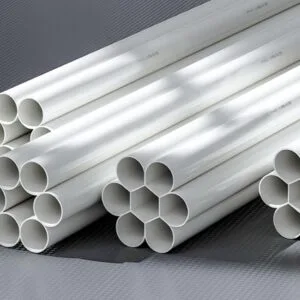
Comportement d'ingénierie structurelle
Le PVC-U est un thermoplastique rigide largement utilisé dans les systèmes de pipelines alimentés par gravité et à basse pression Sa structure moléculaire ne contient aucun plastifiant, ce qui entraîne une stabilité dimensionnelle élevée et une faible déformation sous charge statique.
Propriétés mécaniques clés
- Densité : ~1,351,45 g/cm³
- Résistance à la traction : 45 MPa
- Température de ramollissement Vicat : ~80 °C
- Module élastique : classification de haute rigidité parmi les thermoplastiques
Interprétation Ingénierie
Le PVC-U fonctionne mieux dans les systèmes où les fluctuations de pression interne sont minimes Sa rigidité réduit la déflexion des tuyaux dans les installations enterrées, en particulier dans les réseaux d'égouts et les canaux de drainage.
Cependant, les ingénieurs évitent généralement le PVC-U dans :
- Régions cyclistes Freeze
- Environnements d'excavation à fort impact
- Systèmes de fluides industriels à haute température
Note d'extension d'application
Des études d'ingénierie municipales récentes (Revue des systèmes d'eau urbains 2025, rapport sur les infrastructures de l'UE) montrent que le PVC-U représente toujours une part importante des canalisations de drainage gravitaire en raison de ses effets suivants :
- Faible complexité d'installation
- Haute résistance à la corrosion
- Longue durée de vie dans des conditions de sol stables
PEHD (Polyéthylène haute densité)
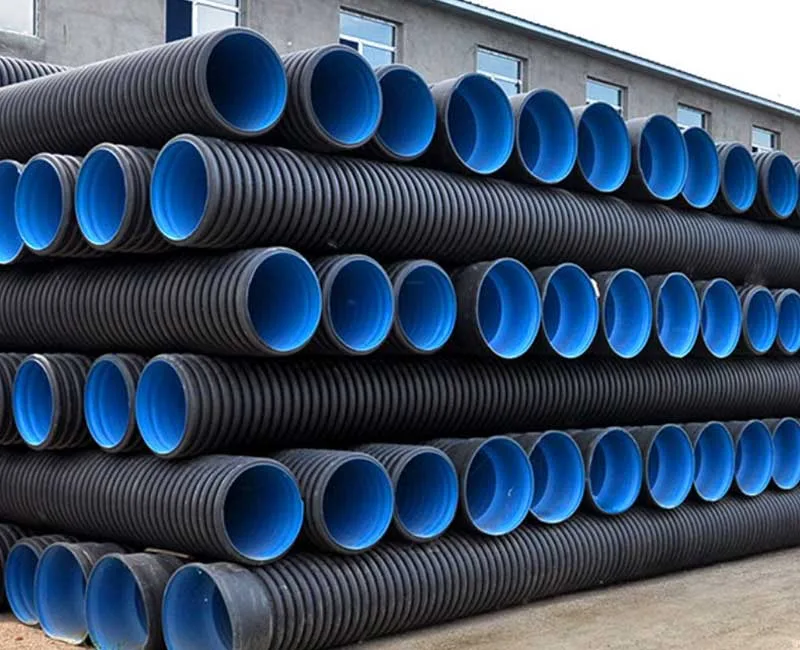
Caractéristiques avancées de l’ingénierie des polymères
Le PEHD est largement reconnu comme le matériau de référence dans les systèmes de pipelines modernes en raison de son équilibre entre flexibilité, ténacité et durabilité à long terme dans des conditions de charge dynamique.
Paramètres clés de l'ingénierie
- Densité : 0,941, 965 g/cm³
- Résistance à la traction : 20 7 MPa
- Durée de vie : 5000 ans (modèle extrapolé ISO 9080)
- résistance aux fissures PENT : >5000 heures
Perspective des performances structurelles
Contrairement aux matériaux rigides, le PEHD présente une déformation élastique contrôlée, lui permettant de :
- Absorber le mouvement du sol
- Résister aux contraintes sismiques
- Maintenir l'intégrité des joints dans les installations sans tranchée
Cela le rend particulièrement précieux dans les infrastructures urbaines modernes où l’instabilité du sol est de plus en plus courante.
Insight des tendances de l’industrie (données d’infrastructure 2026
Selon des études mondiales sur l’adoption des pipelines de polymères :
- L'utilisation de PEHD dans la distribution d'eau a augmenté d'environ 381TP7 T au cours des cinq dernières années
- Les méthodes d'installation sans tranchée (HDD, rafale de tuyaux) sont le principal moteur de croissance
- Les réseaux de distribution de gaz passent rapidement de l'acier aux systèmes PEHD dans plusieurs régions
PP-R (copolymère aléatoire de polypropylène)
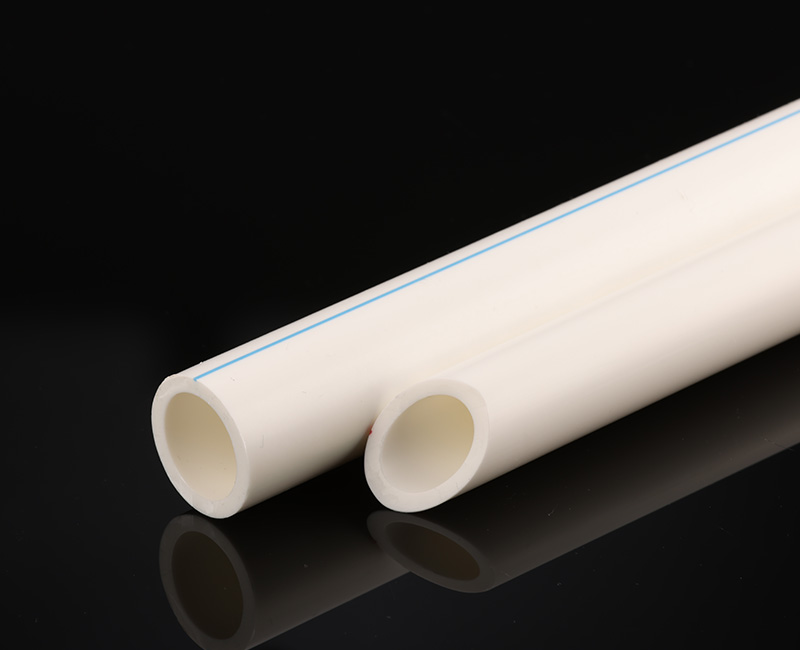
Rôle d'ingénierie des fluides thermiques
Le PP-R est conçu pour les environnements thermiques contrôlés, en particulier dans les systèmes de distribution d'eau potable et de CVC.
Propriétés Thermiques et Mécaniques
- Température de fonctionnement continue : jusqu'à 70 °C
- Tolérance à court terme : 95 °C
- Conductivité thermique : ~0,24 W/m·K
- Avantage d'efficacité de faible perte de chaleur
Logique des applications d'ingénierie
Les systèmes PP-R sont conçus pour :
- Canalisations d'eau chaude domestiques
- Bâtiment des systèmes de circulation CVC
- Distribution d'eau potable sous pression contrôlée
Sa faible conductivité thermique réduit la perte d'énergie, ce qui le rend très efficace dans les longues lignes de distribution.
Conformité et Normalisation
Les systèmes PP-R sont largement alignés sur
- Normes EN ISO 15874
- Cadres européens de certification de l’eau potable
- Construire des réglementations en matière d’efficacité énergétique dans les régions à climat froid
MPP (Polypropylène modifié)
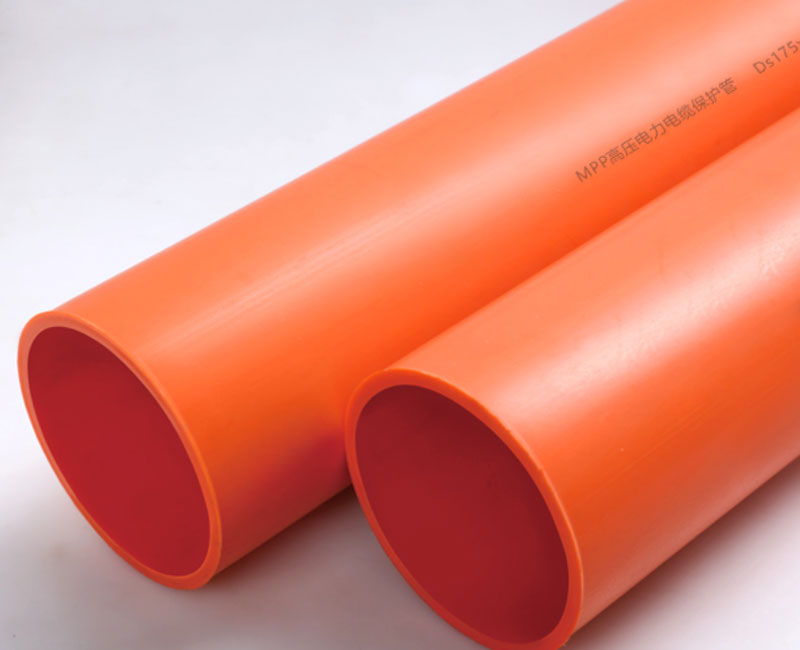
Concept de renforcement technique
Le MPP n'est pas conçu principalement pour le transport de fluides mais pour les systèmes de protection structurelle Il est conçu pour les environnements souterrains à forte charge où les contraintes mécaniques dominent.
Indicateurs de Performance Mécanique
- Résistance à la compression : >81 kN/m²
- Raideur de l'anneau : classification SN16SN32
- Résistance élevée à la déformation sous une charge d'enfouissement profonde
Applications d'ingénierie fonctionnelle
MPP est largement déployé dans :
- Conduits souterrains de protection des câbles
- Couloirs de transport d'énergie à haute tension
- Systèmes de base de communication de ville intelligente
Explication de l'avantage structurel
Contrairement aux canalisations de fluides, les systèmes MPP doivent résister
- Pression de compactage du sol
- Vibration de charge de trafic
- Déformation par fluage à long terme
Cela en fait une solution privilégiée dans la planification moderne des infrastructures souterraines urbaines.
PE (Polyéthylène de qualité générale)
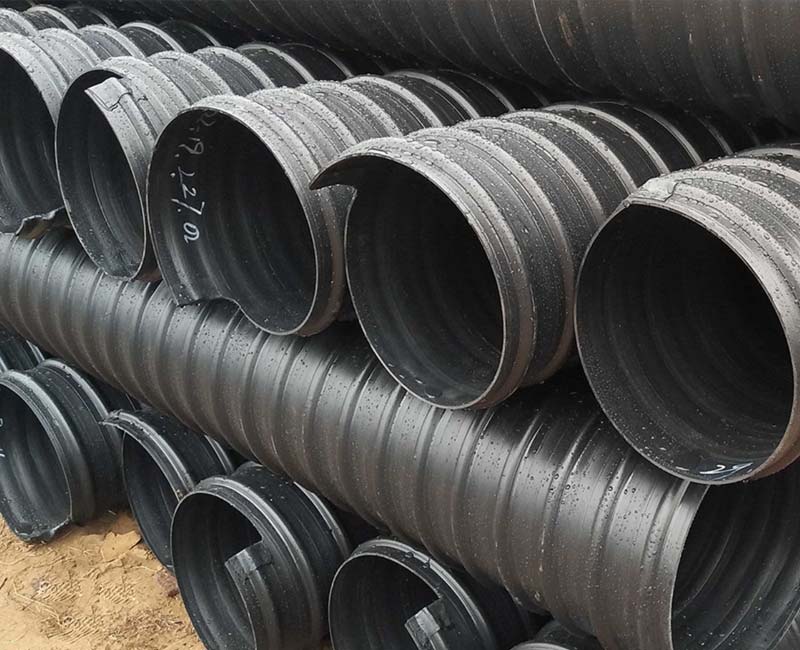
Expansion de la classification des matériaux
Les plastiques de canalisation à base de polyéthylène comprennent notamment
- LDPE (polyéthylène basse densité)
- MDPE (polyéthylène moyenne densité)
- PEHD (polyéthylène haute densité)
Chaque variante est optimisée pour différentes exigences de flexibilité et de pression.
Profil de performance d'ingénierie
- Résistance à la fatigue élevée sous chargement cyclique
- Excellente résistance chimique aux hydrocarbures
- Adaptabilité d'installation flexible
Profondeur d'application industrielle
Les systèmes PE sont largement utilisés dans :
- Canalisations de transport de lisier minier
- Lignes de transfert chimique
- Systèmes d'irrigation et de distribution agricole
Dans les environnements abrasifs tels que l'exploitation minière, les matériaux PE réduisent les taux de défaillance liés à l'usure par rapport aux pipelines métalliques.
Plastiques de pipeline Matrice de comparaison des performances (tableau d'ingénierie étendu)
| Matériel | Densité | Température maximale | Pression Évaluation | Résistance aux fissures | Cycle de vie (Années) | Application clé |
|---|---|---|---|---|---|---|
| PVC-U | Moyen | 60°C | Moyen | Moyen | 2500 | Drainage, eau |
| PEHD | Faible | 60°C | Haut | Très haut | 50100 | Gaz, eau, exploitation minière |
| PP-R | Faible | 95°C | Moyen | Moyen | 300 | CVC, eau chaude |
| MPP | Moyen | 70°C | Très haut | Haut | 400 | Protection des câbles |
| PE | Faible | 60°C | Moyen-élevé | Très haut | 4080 | Transport industriel |
Plastiques de pipeline Modèle d'ingénierie du cycle de vie (analyse LCC+LCA)
Modèle de structure de coûts intégrée
L'évaluation moderne des infrastructures comprend notamment
- CAPEX (investissement initial)
- OPEX (exploitation & maintenance)
- Coût de risque (défaillance + fuite + temps d'arrêt)
- Coût environnemental (empreinte carbone)
Simulation du cycle de vie sur 20 ans (étude de référence mondiale)
| Type de système | Indice de coût initial | Coût d'entretien | Risque d'échec | Score total du cycle de vie |
|---|---|---|---|---|
| Tuyau en acier | 100 | Haut | Haut | 100 |
| Fonte ductile | 85 | Moyen | Moyen | 78 |
| Plastiques de pipeline | 70 | Faible | Très faible | 55 |
Conclusion: les plastiques des pipelines réduisent le coût du cycle de vie 30 4% sur 20 ans.
Études de cas d'ingénierie réelles (examen technique élargi)
Étude de cas A : Système d'eau municipal du désert (Moyen-Orient)
Défi
- Eaux souterraines à forte salinité
- Fluctuation extrême de la température (5 °C à 55 °C)
- Corrosion fréquente dans les pipelines métalliques
Solution
Réseau de plastique de pipeline basé sur le PEHD installé à l'aide de la technologie HDD sans tranchée.
Résultats
- Réduction de 921TP7 T des incidents de fuite
- Aucune défaillance de corrosion au cours de la période de surveillance de 6 ans
- Intervalle d'entretien prolongé de 12 mois à 5 ans
Étude de cas B : Réseau de pipelines industriels chimiques (Europe)
Défi
- Eaux usées acides et alcalines fortes
- Dégradation des tuyaux métalliques dans les 18 mois
Solution
Système de plastique de pipeline hybride PVC-U + PP-R
Résultats
- Fonctionnement continu de 5 ans sans remplacement
- Stabilité de résistance chimique améliorée par 88%
- Temps d'arrêt opérationnel réduit de 62%
Étude de cas C : Infrastructure souterraine de Smart City (Chine)
Innovation
Intégration des plastiques de pipeline HDPE avec des capteurs de surveillance des fuites IoT.
Résultat
- Détection d'anomalies de pression en temps réel
- Amélioration 401TP7 T du temps de réponse de maintenance
- Zéro problème d'interférence électromagnétique
Normes de fabrication et conformité au niveau du livre blanc
Normes internationales appliquées
Les systèmes en plastique pour pipelines sont généralement conformes à :
- ISO 4427 (systèmes d'alimentation en eau PE)
- ISO 1452 (systèmes de tuyauterie PVC-U)
- EN 12201 (systèmes de tuyauterie en plastique pour l'approvisionnement en eau)
- ASTM D3035 (norme sur les tuyaux en polyéthylène)
Processus d'ingénierie du contrôle de la qualité
- Tolérance dimensionnelle : ±0.3 mm (norme d'extrusion HDPE)
- Essai de pression hydrostatique : 1,5× pression nominale
- Essai de fissuration sous contrainte environnementale (ESCR > 1000 heures minimum)
Guide profond d’ingénierie d’installation
Compatibilité technologique sans tranchée
Les plastiques de pipeline permettent des méthodes d'installation modernes :
- Forage directionnel horizontal (HDD)
- Remplacement de l'éclatement des tuyaux
- Rééducation sliplinge
Ces méthodes réduisent les coûts d'excavation jusqu'à 60% en milieu urbain.
Ingénierie du soudage et du jointoiement
Soudage par fusion en PEHD
- Fusion des fesses
- Électrofusion
Fournit résistance de joint monolithique équivalente à la résistance du corps de tuyau (efficacité 100%).
PP-R Fusion Thermique
- La fusion de la prise assure un collage sans fuite
- Aucun matériau d'étanchéité supplémentaire requis
Tendances du marché et prévisions industrielles 2026
Moteurs de croissance
- Modernisations des infrastructures mondiales en matière de pénurie d’eau
- Projets d'expansion de villes intelligentes
- Demande industrielle d’atténuation de la corrosion
- Systèmes de certification des bâtiments écologiques (LEED, BREEAM)
Aperçu du marché
Selon une prévision mondiale de pipeline de polymères de 2026 :
- Marché des plastiques pour pipelines prévu TCAC : 6.8%8.2%
- L'Asie-Pacifique est en tête de la croissance de la demande
- Le PEHD domine les applications municipales
Stratégie de sélection en ingénierie des plastiques de pipeline
Cadre de la matrice de décision
Étape 1 : Classification de l
- Côtier → PEHD
- Usine chimique → PVC-U / PP-R
- Haute charge souterraine → MPP
Étape 2 : Évaluation de la température
- Haute température → PP-R
- Normal → PVC-U/HDPE
Étape 3 : Exigence de pression
- Haute pression → PEHD /MPP
- Basse pression → PVC-U
Conclusion
Plastiques pour pipelines représentent une évolution structurelle dans les systèmes d'infrastructure modernes Avec une résistance supérieure à la corrosion, un coût de cycle de vie inférieur et une compatibilité d'installation avancée, des matériaux comme le PVC-U, le PEHD, le PP-R, le MPP et le PE sont désormais des composants de base dans la conception technique mondiale.
En 2026 et au-delà, la sélection des matériaux des pipelines est de plus en plus régie par modélisation du cycle de vie des performances plutôt que considérations de coût initial, [TRADUCTION], faire des systèmes à base de polymères le choix dominant pour le développement durable des infrastructures.
FAQ
Ce qui fait plastiques pipelines mieux que les tuyaux métalliques ?
Ils éliminent la corrosion, réduisent les coûts de maintenance et prolongent considérablement le cycle de vie.
Les plastiques de pipeline conviennent-ils aux systèmes haute pression ?
Oui, les systèmes HDPE et MPP sont conçus pour les applications industrielles moyenne à haute pression.
Combien de temps durent les plastiques de pipeline dans des conditions réelles ?
Selon le type de matériau, la durée de vie varie de 30 à plus de 100 ans.
Les plastiques de pipeline peuvent-ils gérer le transport de
Oui, en particulier le PEHD et le PVC-U qui résistent aux acides, aux alcalis et aux solvants.
Quel est le principal inconvénient des plastiques de pipeline ?
Résistance à la température inférieure par rapport à l'acier dans les applications de chaleur extrême.