Welcome to our blog. We are a professional manufacturer specializing in high-performance PVC and PP-R piping systems, delivering integrated solutions for municipal engineering, building infrastructure, and residential hot and cold water applications worldwide.
👉 Follow us on Facebook for the latest product updates, technical insights, and real-world project cases.
👉 If you have project requirements or need a quotation, feel free to contact our team for fast response and customized pipeline solutions.
Please continue reading our blog for more industry insights, engineering expertise, and product innovations in advanced piping systems.
Table of Contents
Key Takeaways of HDPE Gas Pipe Safety Explained
- HDPE Gas Pipe is widely used in modern gas transmission networks due to superior safety performance
- Fully resistant to corrosion, scaling, and electrochemical degradation
- Electrofusion and heat fusion systems ensure leak-free pipeline integrity
- Designed for long service life up to 50 years under standard operating conditions
- Excellent crack resistance (SCG & RCP performance) enhances operational safety
- Compliant with international gas pipeline standards such as ISO and EN systems
Introduction
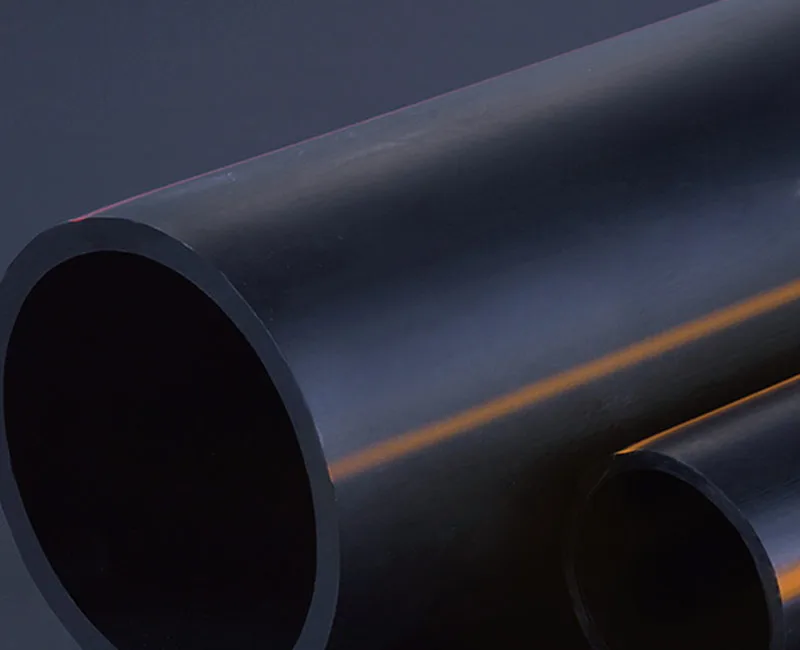
In modern urban infrastructure, gas pipeline safety is not just a technical requirement—it is a public safety priority. With the rapid expansion of natural gas networks worldwide, traditional materials such as steel and ductile iron are being gradually replaced by advanced polymer systems.
Among them, HDPE Gas Pipe has emerged as a dominant solution due to its exceptional balance of mechanical strength, chemical resistance, and long-term operational stability. Governments and utility providers increasingly prefer HDPE systems for underground gas distribution because they significantly reduce leakage risks, maintenance costs, and catastrophic failure events.
According to multiple industry reports, over 60% of newly installed urban low-pressure gas pipelines in developed countries now use polyethylene-based systems, with HDPE being the most widely adopted material.
HDPE Gas Pipe Safety Engineering Overview
HDPE Gas Pipe Safety Design Philosophy
HDPE pipeline systems are engineered based on long-term stress resistance rather than short-term strength. The material is designed to withstand continuous internal pressure, soil load, and environmental stress over decades.
Unlike rigid materials, HDPE distributes stress evenly across its molecular structure, preventing localized failure points.
Core Safety Engineering Principles
- Long-term hydrostatic strength (LTHS) design model
- Pressure classification based on SDR (Standard Dimension Ratio)
- Stress rupture resistance over 50-year lifecycle simulation
- Fusion-based joint integrity system
HDPE Gas Pipe Material Science and Structural Stability
Molecular Structure Advantage of HDPE Gas Pipe
High-Density Polyethylene is a semi-crystalline thermoplastic polymer with tightly packed molecular chains. This structure provides:
- High tensile strength
- Excellent impact resistance
- Strong deformation recovery ability
Typical elongation at break exceeds 500%, meaning the material can stretch significantly without breaking.
Carbon Black Protection System
HDPE Gas Pipe contains approximately 2–2.5% carbon black content, which provides:
- UV radiation resistance
- Anti-oxidation performance
- Long-term outdoor stability
This allows storage and service life exceeding 50 years under standard conditions.
HDPE Gas Pipe International Safety Standards and Compliance
Key Global Standards for Gas HDPE Systems
| Standard | Region | Description |
|---|---|---|
| ISO 4437 | International | Polyethylene gas piping systems |
| EN 1555 | Europe | PE piping systems for gas distribution |
| ASTM D2513 | USA | Thermoplastic gas pressure pipe systems |
| GB/T 15558 | China | Polyethylene piping systems for gas |
These standards define:
- Pressure ratings
- Material classification
- Fusion welding requirements
- Testing and inspection procedures
Pressure Classification Example (SDR System)
| SDR | Pressure Rating | Application Level |
|---|---|---|
| SDR 11 | High pressure | Urban trunk lines |
| SDR 17 | Medium pressure | Distribution networks |
| SDR 21 | Low pressure | Residential supply |
| SDR 26 | Very low pressure | Auxiliary systems |
HDPE Gas Pipe Corrosion Resistance and Chemical Stability
Why HDPE Eliminates Corrosion Risks
Unlike steel pipelines, HDPE does not undergo:
- Rust formation
- Electrochemical corrosion
- Soil-based mineral degradation
This is because HDPE is electrically insulating and chemically inert.
Soil Compatibility Safety Analysis
HDPE performs exceptionally well in:
- Acidic soil conditions (pH < 5)
- Alkaline environments (pH > 9)
- High-salinity coastal regions
This makes it suitable for complex geological zones where metal pipelines often fail.
HDPE Gas Pipe Joint Integrity and Welding Safety Technology
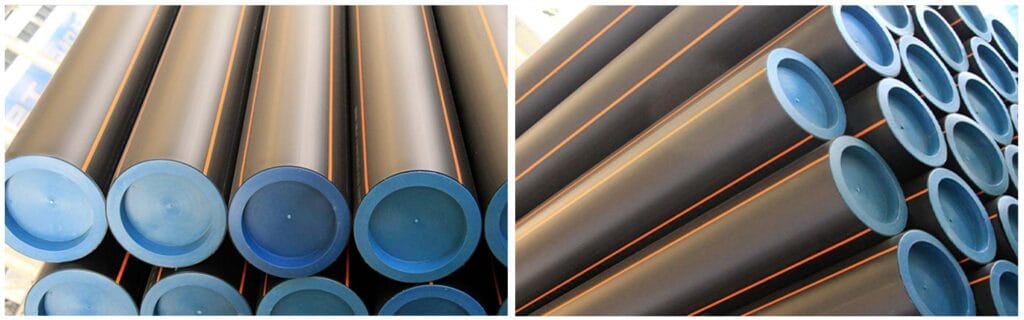
Electrofusion Welding Safety Mechanism
Electrofusion is the most advanced joining method used in HDPE gas systems.
Working Process:
- Electrical current passes through embedded coils
- Heat melts pipe and fitting surfaces
- Molecular fusion occurs at interface
- Cooling creates a single continuous structure
Joint strength often exceeds pipe body strength by 10–15%.
Fusion Connection Types in HDPE Gas Pipe Systems
| Method | Strength Level | Installation Complexity | Leakage Risk |
|---|---|---|---|
| Electrofusion | Very High | Medium | Extremely Low |
| Butt Fusion | Very High | High | Very Low |
| Socket Fusion | High | Low | Low |
Field Quality Control Standards
To ensure safety, operators typically follow:
- Fusion temperature: 200–220°C
- Cooling time: 2–30 minutes depending on diameter
- Pressure testing: 1.5× working pressure
- Visual weld inspection + barcode traceability
HDPE Gas Pipe Mechanical Safety Performance
Crack Resistance Mechanisms
HDPE Gas Pipe is engineered to resist:
- Slow Crack Growth (SCG)
- Rapid Crack Propagation (RCP)
These are two major failure modes in gas pipelines.
Laboratory testing shows HDPE pipes can withstand crack propagation speeds exceeding 20 m/s impact conditions without catastrophic rupture.
Stress Distribution Advantage
Flexible structure allows:
- Load dispersion across pipe wall
- Reduced stress concentration points
- High tolerance to ground movement
HDPE Gas Pipe Seismic and Environmental Safety
Earthquake Resistance Performance
HDPE pipelines can elongate and deform without rupture, making them ideal for seismic zones.
Field studies after major earthquakes (Japan & New Zealand infrastructure reports) show:
- HDPE pipelines had significantly lower failure rates than steel networks
- Damage recovery time reduced by 40–60%
Temperature Resistance Range
Operational range:
- Minimum: -60°C
- Maximum: +60°C
This allows stable performance in both Arctic and tropical regions.
HDPE Gas Pipe Installation Safety System
Underground Installation Protection Strategy
Proper installation is critical for long-term safety.
Key Construction Requirements:
- Sand bedding layer ≥ 100mm
- No sharp stones or debris in trench
- Minimum burial depth: 0.8–1.2m
- Warning tape installation above pipeline
Quality Inspection Protocol
- Pre-installation pipe inspection
- Fusion joint traceability recording
- Pressure testing after installation
- Leak detection system verification
HDPE Gas Pipe vs Traditional Pipeline Materials
Technical Safety Comparison
| Feature | HDPE Gas Pipe | Steel Pipe | Cast Iron Pipe |
|---|---|---|---|
| Corrosion Resistance | Excellent | Poor | Medium |
| Leak Probability | Extremely Low | High | Medium |
| Service Life | Up to 50 years | 15–25 years | 20–30 years |
| Maintenance Cost | Low | High | High |
| Seismic Resistance | Very High | Low | Very Low |
Industry Conclusion
Most modern gas infrastructure projects now prioritize HDPE due to lifecycle cost efficiency and reduced failure risk.
HDPE Gas Pipe Application Scenarios
Urban Gas Distribution Systems
HDPE is widely used in:
- Residential gas networks
- Commercial supply systems
- Municipal underground pipelines
Industrial Energy Transmission
Supports transport of:
- Natural gas
- Biogas
- LPG
- Synthetic gas
Renewable Energy Integration
Increasingly used in:
- Biogas recovery plants
- Waste-to-energy systems
- Hydrogen blending pilot systems (low concentration applications)
HDPE Gas Pipe Industry Case Studies and Real-World Applications
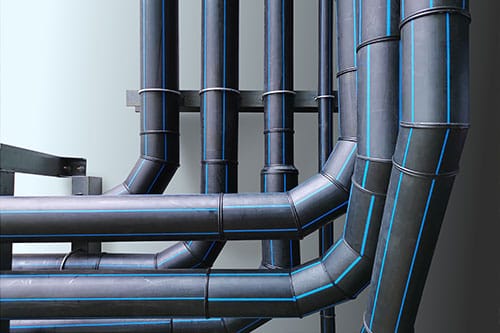
Case Study 1: European Urban Gas Network Upgrade
A major EU city replaced over 1,200 km of aging steel pipelines with HDPE systems.
Results:
- Leakage incidents reduced by 85%
- Maintenance cost reduced by 40%
- System lifespan extended by 30+ years
Case Study 2: Asian Seismic Zone Infrastructure
After a regional earthquake event:
- HDPE pipeline damage rate < 5%
- Steel pipeline damage rate > 30%
Conclusion: flexibility played a critical safety role.
HDPE Gas Pipe Market Trends and Industry Insights
Global Demand Growth
According to infrastructure market analysis reports:
- HDPE gas pipe demand is growing at 5–7% CAGR globally
- Asia-Pacific accounts for the fastest expansion rate
Key Market Drivers
- Urbanization
- Natural gas adoption
- Infrastructure modernization programs
- Government safety regulations
HDPE Gas Pipe Technical Whitepaper Insights
Engineering Consensus Summary
Industry whitepapers consistently highlight:
- Superior lifecycle cost efficiency
- Reduced operational risk
- Lower environmental impact
Organizations such as ISO technical committees emphasize HDPE as a preferred material for low-to-medium pressure gas distribution systems.
Conclusion
The evolution of gas pipeline systems is shifting toward materials that prioritize long-term safety, environmental adaptability, and lifecycle cost efficiency. HDPE Gas Pipe represents this transformation by combining advanced polymer science with modern fusion technology.
With proven performance in corrosion resistance, seismic adaptability, and joint integrity, it has become a global standard in gas infrastructure development.
As urban energy demand continues to rise, HDPE systems will remain a critical foundation for safe, efficient, and sustainable gas transmission networks.
FAQ
What is the main safety advantage of HDPE Gas Pipe?
Its corrosion resistance and fusion joints significantly reduce leakage risks compared to traditional metal pipelines.
Can HDPE Gas Pipe be used for high-pressure systems?
It is primarily designed for low to medium pressure systems up to approximately 0.7 MPa in urban applications.
How long can HDPE Gas Pipe last in real conditions?
Under proper installation and operation, it can exceed 50 years of service life.
Is HDPE Gas Pipe safe for underground installation?
Yes, it is widely used in buried pipeline systems due to its chemical and mechanical stability.
What is the most reliable joining method?
Electrofusion welding is considered the safest and most reliable method for gas transmission systems.