Product

With stable product quality and advanced manufacturing processes, we provide safe, durable and efficient pipeline solutions for various infrastructure construction projects.

Mpp High-Voltage Power Cable Conduit

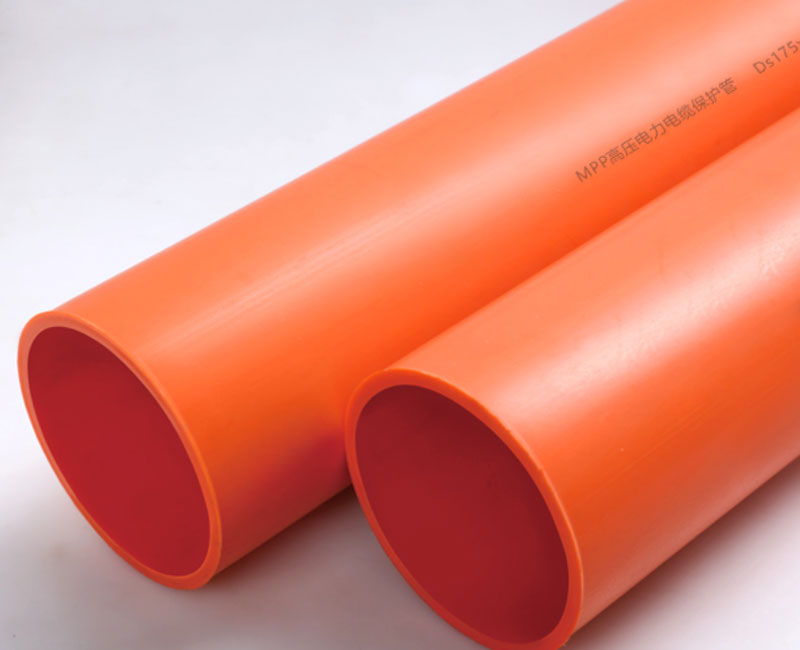
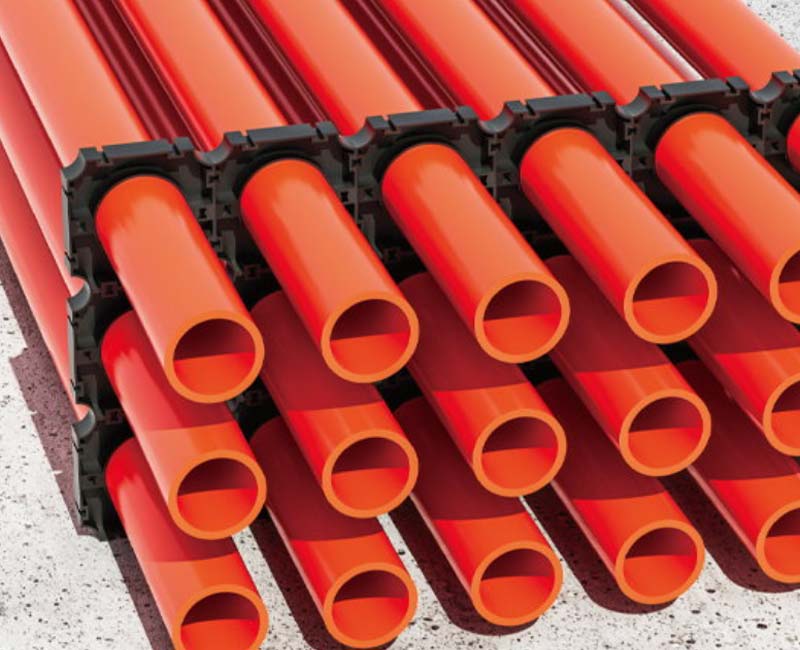
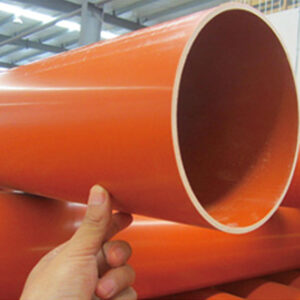
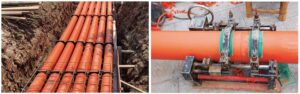
MPP power conduit, also known as modified polypropylene power cable protection pipe, uses modified polypropylene as its main raw material. It allows for the laying of pipelines and cables in special locations such as roads, railways, buildings, and riverbeds without extensive dredging or road surface damage. Compared to the traditional “trenching and burying method,” trenchless power conduit engineering is more environmentally friendly, eliminating the dust, traffic congestion, and other disturbances caused by traditional construction. This technology can also be used to lay pipelines in areas where excavation is not feasible, such as historical sites, urban areas, crop and farmland protection areas, highways, and rivers. Its high temperature resistance and external pressure resistance make it suitable for high-voltage power transmission cables of 10KV and above. Available in sizes from 110mm to 250mm, it is divided into standard and reinforced types. The standard type is suitable for trenching and trenchless crossing projects with a burial depth of less than 4 meters; the reinforced type is suitable for trenchless crossing projects with a burial depth greater than 4 meters. This product has passed the testing of the National Chemical Building Materials Testing Center and has achieved good social and economic benefits.

Product Description

Product Introduction:

This product has passed the testing of authoritative departments such as the National Chemical Building Materials Testing Center and the Power Industry Power Equipment and Line Quality Inspection and Testing Center, and has been vigorously promoted in the power and telecommunications industries, achieving good social and economic benefits. Our company organizes production and testing in accordance with the power industry standard DL/T802.7-2010 “Technical Conditions for Conduits for Power Cables Part 7: Modified Polypropylene Plastic Cable Conduits for Trenchless Construction”.

Product Advantages:

◆ High Compression Resistance: The modifiers and additives in the MPP cable protection conduit are firmly bonded to the polypropylene material, significantly improving the ring compression force and compression resistance of the product.

◆ Good Low-Temperature and Heat Resistance: The molecular structure of MPP material gives the pipe excellent low-temperature impact resistance and heat resistance. It also possesses excellent electrical insulation properties.

◆ Good Flexibility and High Tensile Strength: Due to the high elongation at break of the pipe material, it has good resistance to water hammer pressure. The pipe joints and the pipe itself have good resistance to buckling caused by ground subsidence and movement, making it less prone to breakage or leakage. It is a type of pipe with excellent seismic performance.

◆ Smooth Pipe Wall and Corrosion Resistance: Lightweight, smooth, and with low frictional resistance, it can be thermofused and welded. Polypropylene material is resistant to the erosion of various chemical media and exhibits no chemical corrosion.

◆ Long Service Life: The pipe can be used safely for over fifty years. The long-term operating temperature range is -5~70℃

Pipe Specifications And Models:

SpecificationSN24SN32SN40
Ring Stiffness(KPa)Average Outer Diameter(mm)Ring Stiffness(KPa)Average Outer Diameter(mm)Ring Stiffness(KPa)Average Outer Diameter(mm)
1102463284010
12524832104012
150241032124014
175241232144016
200241432164018
225241632184020
250241832204022

Installation Requirements and Precautions:

● Before connecting pipes, mill the connecting ends, clean, heat the pipe openings, and ensure both ends of the pipe are flat and pressure-welded securely to form a uniform convex joint.

● When horizontally directional drilling is used to lay power cable pipes, the drilling trajectory, reference points, and control elevation of the construction area must be monitored at all times. Construction must be stopped immediately if any problems are found.

● Before connecting pipes, check their appearance, dimensions, and manufacturer. If pipes from different manufacturers need to be mixed, they must be inspected and confirmed to be of equivalent quality before use.

● After each connection is completed, an inspection should be conducted. Any connections that do not meet requirements must be reworked.

● Pipes should be stacked neatly, kept away from high temperatures, and handled with care during transport; they must not be thrown or dropped.

Installation and Acceptance:

● During construction, the project should undergo phased acceptance according to its implementation details, culminating in a final acceptance inspection upon completion. The acceptance sequence should be: acceptance by the construction team, acceptance by the construction unit’s quality inspection department, and then submission to the supervision unit and the construction unit for final acceptance.

● The drilling process of the pilot hole should be supervised on-site, and the drilling trajectory should be confirmed and certified.

● The pipe welding and assembly process should be supervised on-site, and the pipe welding and assembly should be inspected and certified.

● After pipe laying, the construction unit should, together with the supervision unit, inspect and certified the numbering of the pipelines at both ends and the pipe flow test.

● The construction of the manholes at both ends of the pipeline and the connecting pipework should be inspected according to relevant regulations.

● Test reports for the pipes and their joints should be included in the project completion materials and ultimately submitted to the construction unit for acceptance. The construction unit will organize the final acceptance inspection upon project completion.

Application Areas:

1. Municipal, telecommunications, power, gas, water supply, and heating pipeline projects;

2. Trenchless horizontal directional drilling power pipeline projects in urban and rural areas;

3. Trenchless horizontal directional drilling sewage pipeline projects in urban and rural areas;

4. Open-cut power pipeline projects;

5. Industrial wastewater discharge projects;
 

Contact Us

Join hands to create a shared future.

If you are interested in collaboration, require project consultation, or wish to discuss business opportunities, please feel free to contact us. We look forward to establishing a long-term cooperative relationship with you.

官网询盘
官网询盘