- weitigong.......
- weitigong.......

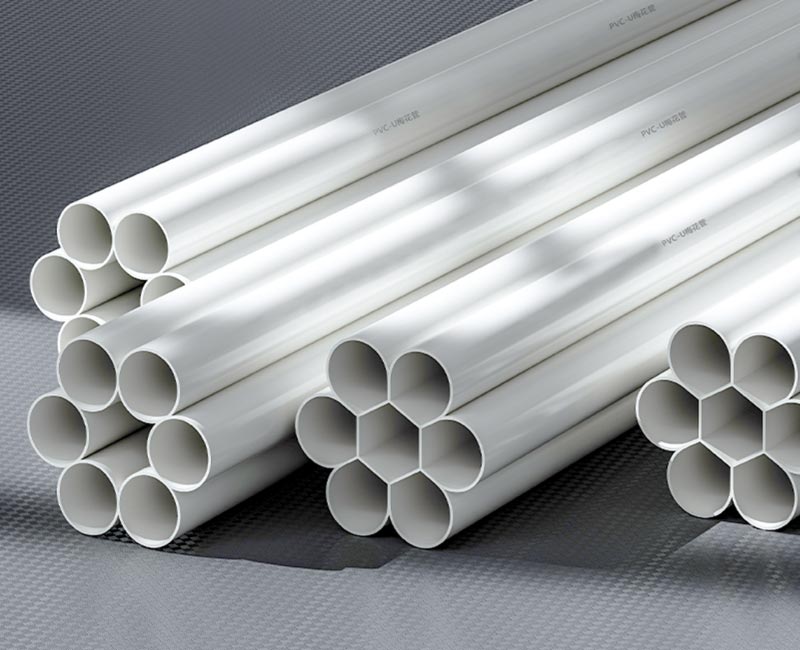
Pipe Specifications And Models:
| Effective Number Of Holes | Inner Diameter | Inner Wall Thickness (mm) | Outer Wall Thickness (mm) | Minimum Wall Thickness Of The Sleeve (mm) |
| Nominal Value | ||||
| 5 Holes | 25(26) | 1.6~2.2 | 1.8~2.4 | 1.6 |
| 4-Hole, 5-Hole | 28 | 1.8~2.4 | 2.0~2.6 | 1.6 |
| 4-Hole, 5-Hole, 7-Hole | 32 | 2.0~2.6 | 2.2~2.8 | 2.0 |
Product Advantages:
1. Excellent insulation, flame retardancy, and impact resistance. Utilizing a multi-hole integrated structure, it boasts high rigidity and uniform stress distribution.
2. Low internal friction coefficient, facilitating easy cable threading and simple construction. Multiple holes allow for pre-drilled conduits, improving the utilization rate of communication port positions.
3. Wide applicable temperature range (+80-40°C), suitable for both tropical and cold regions. The connector uses a socket structure, allowing for tool-free connection between pipes, facilitating construction and maintenance.
4. The service life of the plum blossom conduit exceeds 30 years under burial depth conditions.
5. Utilizing a straight-through socket structure during installation, with pipe caps at the ends, it facilitates installation and maintenance. It exhibits excellent stability against alkalis, most inorganic acids (except concentrated nitric acid, etc.), most organic and inorganic salts, and hydrogen peroxide. It is also relatively stable against solvents such as ethanol, gasoline, and mineral oil.
6. The conduit has a uniform white color, but other colors can be customized upon request. 7. The pipes should be smooth and flat, with uniform color, and free from defects such as deformation or twisting. Cracks, damage, and perforations are not permitted on the inner or outer walls. Markings should be durable and easily identifiable.
Installation Precautions:
1. The trench for burying the pipe should be as straight as possible according to design requirements and construction operations. If the bottom of the trench is uneven, a layer of fine sand can be laid. Before burying the pipe, remove any hard objects from the trench to prevent pipe deformation. When starting to bury the pipe, leave 10-15 cm of the multi-hole pipe in the manhole for cable threading. The exposed end of the sub-pipe in the manhole should be plugged. During pipe burying, it is strictly forbidden for mud, sand, or foreign objects to enter the pipe.
2. For connecting multi-hole perforated pipes, place the pipe with the positioning rib facing upwards. Clean the outer wall of the pipe end, then insert the socket of one end of the pipe. Place a thick wooden board on the end face and tap the board with a hammer to ensure the pipe is properly inserted. At the other end of the pipe, insert another pipe into the socket and insert it properly, continuing this process until the next manhole. In actual construction, the combined length of each pipe may not be the same as the length between manholes. In this case, measure the pipe length according to the actual manhole length and distance, and cut it with a hacksaw, ensuring a clean and even cut. After the connection is completed, the end extending into the manhole must be plugged to prevent foreign objects from entering.
3. For first-time installers of this product, do not backfill with soil when laying the first section (the distance between two manholes). Use a cable puller to test through one or two holes. After successful insertion, proceed with the next section for added safety.
4. After the pipes are laid, backfill with fine sand or soil to the height of the pipe, ensuring it is submerged. Do not leave the pipes suspended. Then backfill with other soil. Do not throw large stones or large clods of dry soil onto the pipes.
5. When the pipeline passes through areas prone to severe external damage, cover the joint with cement concrete to ensure safety.
Precautions for using plum blossom pipes:
(1) The trench for laying the pipe should be as straight as possible according to the design requirements and construction operations. If the bottom of the trench is uneven, a layer of fine sand can be laid on it.
(2) For initial installation and use, do not backfill the soil after laying the first section. Use a cable puller to test through one or two holes. After successfully pulling through, lay the next section. This will give you more confidence.
(3) After the pipe is laid, backfill it with fine sand or fine soil to the height of the pipe. Do not leave the pipe suspended. Then backfill with other soil. Do not throw large stones or large dry soil clods at the pipe.
(4) When the pipeline passes through areas that are severely damaged by external forces, cover the joint with cement concrete to ensure its safety. Use plum blossom pipes correctly to maximize their effectiveness.
Application Areas:
Plum blossom-shaped conduits are suitable for laying various cables such as telecommunications optical cables, communication cables, coaxial cables, long-distance communication lines, and cable television broadcasting transmission networks. Seven-hole plum blossom conduits are widely used as sheathing conduits for communication and power cables in mobile, telecommunications, China Unicom, China Netcom, broadcasting, power, railway, and military applications.