- weitigong.......
- weitigong.......

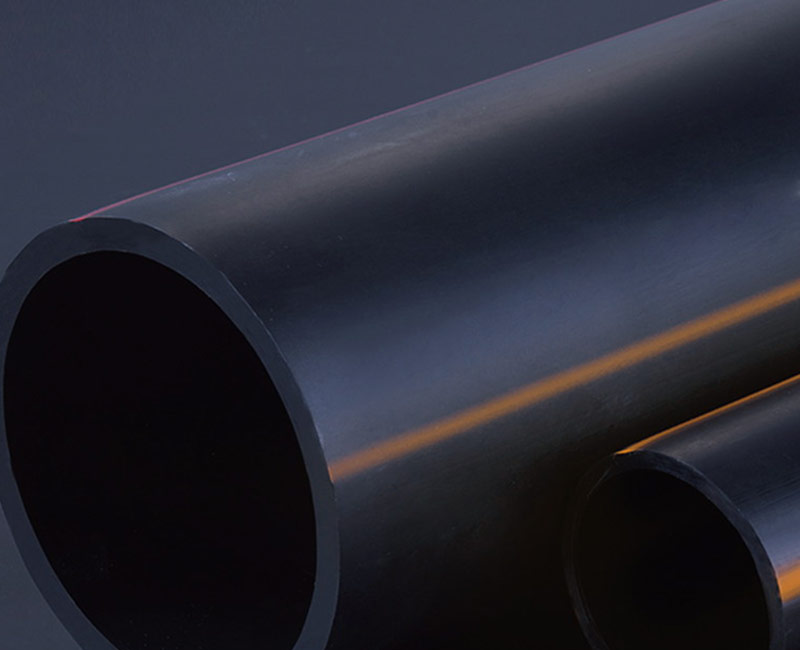
Product Advantages:
◆ Excellent Low-Temperature Impact Resistance: Polyethylene has an extremely low low-temperature embrittlement temperature, allowing for safe use within a temperature range of -60~60℃. During winter construction, the material’s excellent impact resistance prevents pipe cracking.
◆ Excellent Stress Cracking Resistance: HDPE gas pipes exhibit low notch sensitivity, high shear strength, and excellent scratch resistance, with outstanding resistance to environmental stress cracking.
◆ Long Service Life Due to Aging Resistance: Polyethylene pipes containing 2-2.5% uniformly distributed carbon black can be stored or used outdoors for 50 years without damage from ultraviolet radiation.
◆ Excellent Chemical Corrosion Resistance: HDPE gas pipes are resistant to corrosion from various chemical media; chemicals present in the soil will not cause any degradation to the pipes. Polyethylene is an electrical insulator, therefore it will not rot, rust, or undergo electrochemical corrosion.
◆ Reliable Connections: Polyethylene pipe systems are connected using electrofusion, resulting in joints with strength exceeding that of the pipe body itself.
Pipe Specifications And Models:
| Nominal Outer Diameter(mm) | Minimum Wall Thickness(mm) | |||
| SDR11 | SDR17 | SDR21 | SDR26 | |
| 16 | 3.0 | |||
| 20 | 3.0 | 1 | – | – |
| 25 | 3.0 | – | – | |
| 32 | 3.0 | 3.0 | – | |
| 40 | 3.7 | 3.0 | – | – |
| 50 | 4.6 | 3.0 | 3.0 | |
| 63 | 5.8 | 3.3 | 3.0 | – |
| 75 | 6.8 | 4.5 | 3.6 | 3.0 |
| 90 | 8.2 | 5.4 | 4.3 | 3.5 |
| 110 | 10.0 | 6.6 | 5.3 | 4.2 |
| 125 | 11.4 | 7.4 | 6.0 | 4.8 |
| 140 | 12.7 | 8.3 | 6.7 | 5.4 |
| 160 | 14.6 | 9.5 | 7.7 | 6.2 |
| 180 | 16.4 | 10.7 | 8.6 | 6.9 |
| 200 | 18.2 | 11.9 | 9.6 | 7.7 |
| 225 | 20.5 | 13.4 | 10.8 | 8.6 |
| 250 | 22.7 | 14.8 | 11.9 | 9.6 |
| 280 | 25.4 | 16.6 | 13.4 | 10.7 |
| 315 | 28.6 | 18.7 | 15.0 | 12.1 |
| 355 | 32.2 | 21.1 | 16.9 | 13.6 |
| 400 | 36.4 | 23.7 | 19.1 | 15.3 |
Connection Method:
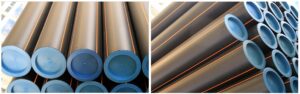
I. Electrofusion Connection
Electrofusion connection involves fitting an electrofusion fitting over a pipe or fitting. An electric current heats the resistance wire on the inner surface of the fitting, melting the inner surface of the fitting and the outer surface of the pipe to which it is inserted, fusing them together.
II. Thermofusion Socket Connection
Using a thermofusion connector, the spigot end of the pipe or fitting and the socket end of the fitting are simultaneously heated and melted. The molten spigot is then inserted into the socket and fixed until cooled.
III. Thermofusion Butt Connection
Thermofusion butt connection involves heating the ends of thermoplastic pipes with a heating plate until they are melted, then butt-jointed and fused together. After cooling, the connection is fixed. Thermofusion butt connection is a primary and traditional method for connecting polypropylene pipes, particularly polyethylene pipes.
Application Areas:
Buried polyethylene (PE) pipelines for natural gas are suitable for underground urban gas transmission systems operating at temperatures between -20°C and 40°C, with a maximum permissible working pressure not exceeding 0.7 MPa. Suitable gas types for transmission include:
1. Natural gas: such as pure natural gas, associated petroleum gas, mine gas, etc.
2. Manufactured gas: such as coke oven gas, water gas, oil-derived gas, blast furnace gas, etc.
3. Liquefied petroleum gas (LPG);
4. Biogas.