Table of Contents
Introduction
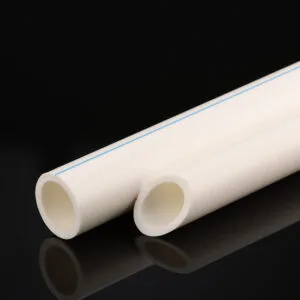
PPR pipe is widely used in building water distribution because it can serve both hot and cold water systems when the correct pipe specification is selected. However, choosing a PPR pipe only by diameter can lead to an incomplete system design. Operating temperature, working pressure, pipe wall thickness, service conditions, fittings, joint quality, and applicable standards all influence long-term performance.
This becomes particularly important in hot water systems. The pressure capability of a thermoplastic pipe is not independent of temperature. As operating temperature rises, the allowable long-term pressure conditions generally need to be evaluated more carefully.
For engineers, contractors, distributors, and project teams, understanding PPR pipe high temperature resistance therefore means looking beyond a single maximum-temperature figure. The complete specification should consider how temperature and pressure interact throughout the expected service life of the piping system.
Bihe focuses on PVC and PP-R piping systems for residential, building, and engineering applications. Its plastic piping solutions include several PPR series intended for hot and cold water distribution and related building applications.
What Determines PPR Pipe Temperature Resistance?
PPR, or polypropylene random copolymer, is a polypropylene material commonly used in hot and cold water piping systems.
Its temperature performance depends on several interconnected factors rather than one universal number.
These include the material formulation, pipe dimensions, wall thickness, operating pressure, duration of exposure, application class, and quality of installation.
A pipe carrying cold water at moderate pressure is therefore operating under very different conditions from the same nominal pipe size carrying continuously heated water.
The distinction matters because thermoplastic materials respond to both mechanical loading and temperature over time. A technically sound PPR system should therefore be evaluated using its intended service conditions instead of relying only on a short-term temperature limit.
The international framework for this type of evaluation is reflected in ISO 15874, which covers polypropylene piping systems for hot and cold water installations inside buildings and considers application classes, design temperatures, design pressures, pipes, fittings, and joints.
PPR Pipe Temperature and Pressure Are Connected
One of the most important principles in PPR pipe selection is simple:
Temperature and pressure should not be evaluated separately.
A pressure designation printed on a pipe does not automatically mean that the pipe can maintain exactly the same working pressure under every possible temperature condition.
As water temperature increases, the long-term mechanical behavior of the polymer changes. For this reason, engineering specifications normally evaluate the combination of:
- operating temperature;
- design pressure;
- expected service duration;
- pipe dimensions;
- safety factors;
- application conditions.
This is particularly relevant in domestic hot water, hotels, hospitals, apartment buildings, commercial facilities, and central hot water distribution systems where pipelines may remain exposed to elevated temperatures for long periods.
A reliable specification should therefore answer two questions together:
What temperature will the pipe experience?
and
What pressure must it withstand at that temperature?
Understanding PN Ratings on PPR Pipe
PPR pipes are commonly identified using PN designations.
PN is often interpreted as a nominal pressure classification, but it should not be treated as a universal operating-pressure guarantee for every temperature.
Common designations encountered in the market may include:
| PPR Classification | General Characteristic | Typical Selection Focus |
|---|---|---|
| PN10 | Thinner wall structure | Lower-demand applications where permitted |
| PN12.5 | Intermediate wall structure | Application-dependent |
| PN16 | Moderate pressure class | Cold or selected water systems |
| PN20 | Heavier wall structure | Commonly considered for hot/cold water systems |
| PN25 | Higher wall thickness | More demanding system conditions |
The exact suitability of each class depends on the governing standard, material grade, dimensions, operating temperature, and system design.
For this reason, project teams should avoid a simplified rule such as:
“PN20 always means the pipe can continuously operate at 20 bar.”
That interpretation ignores temperature, design life, material behavior, and the actual basis of the pipe classification.
Instead, the pipe manufacturer’s technical data and the applicable project standard should be checked before final specification.
What Is SDR and Why Does It Matter?
Another important concept in plastic piping is SDR, or Standard Dimension Ratio.
SDR expresses the relationship between the outside diameter of a pipe and its wall thickness.
In simplified form:
SDR = Outside Diameter ÷ Wall Thickness
For pipes of the same outside diameter, a lower SDR generally corresponds to a thicker wall.
That does not mean lower SDR is automatically the correct choice for every project. It means the pipe geometry is different and must be evaluated against the required pressure and service conditions.
For example, when comparing two PPR pipes with the same nominal outside diameter, one may have a significantly thicker wall. That difference can affect:
- internal flow diameter;
- pressure capability;
- material use;
- hydraulic capacity;
- heat loss characteristics;
- installation planning.
This is why B2B project specifications should include more than simply “32 mm PPR pipe.”
A useful specification may also identify the required series, SDR or wall thickness, applicable standard, service condition, and intended use.
Typical PPR Pipe Service Conditions
Different sections of a building may impose very different demands on the same piping material.
| Application | Temperature Condition | Main Design Consideration |
|---|---|---|
| Cold water supply | Relatively low | Pressure, hygiene, flow capacity |
| Domestic hot water | Elevated | Temperature + pressure |
| Hot water circulation | Long-term elevated exposure | Continuous service conditions |
| Residential plumbing | Mixed hot and cold | System compatibility |
| Commercial buildings | Variable/high demand | Pressure stability and service life |
| Hotels | Repeated hot water demand | Temperature cycles and circulation |
| Hospitals | Continuous building services | Reliability and water-system requirements |
| Heating systems | Application-dependent | Temperature class and system design |
This comparison demonstrates why one PPR pipe specification cannot simply be copied across every project.
A residential cold water branch line and a commercial hot water circulation main may use the same basic material family while requiring different engineering specifications.
Is PPR Pipe Suitable for Hot Water?
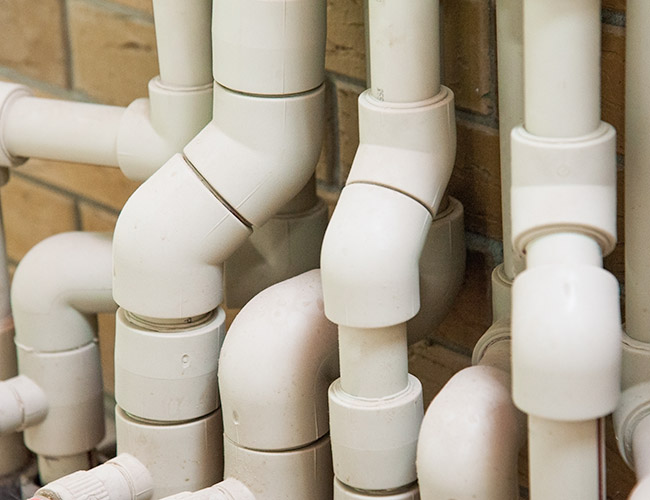
Yes, correctly specified PPR piping systems are widely used for hot water installations.
However, the phrase “suitable for hot water” is too broad to serve as a complete specification.
A project designer should still determine:
- normal operating temperature;
- possible peak temperature;
- continuous working pressure;
- system pressure fluctuations;
- expected operating life;
- pipe series and dimensions;
- fitting compatibility;
- applicable installation standard.
This distinction is important because a pipe briefly exposed to elevated temperature is not experiencing the same condition as a pipe carrying hot water continuously for many years.
ISO 15874 addresses polypropylene piping systems for hot and cold water installations according to defined application conditions rather than relying on a single temperature statement.
For project teams, this is a better way to evaluate PPR pipe high temperature resistance.
Why Continuous Temperature Is More Important Than a Single Maximum
Product descriptions often attract attention by highlighting a maximum temperature.
For engineering projects, however, continuous operating conditions are usually much more useful.
Imagine two installations.
The first normally carries water at a moderate temperature and only occasionally experiences a temporary temperature increase.
The second continuously circulates hot water.
Even if both systems occasionally reach the same peak temperature, their long-term thermal exposure is very different.
A technical evaluation should therefore distinguish between:
continuous operating temperature, which affects the pipe throughout normal service;
temporary peak temperature, which may occur only under exceptional conditions;
and failure or extreme conditions, which should not be confused with acceptable normal operation.
This distinction prevents exaggerated temperature claims from becoming the basis of pipe selection.
How Pressure Changes the Selection of Hot Water PPR Pipe
A hot water pipe experiences internal pressure at the same time that the polymer is exposed to temperature.
As a result, increasing system pressure can change which wall thickness or pipe classification is appropriate.
This means project teams should avoid asking only:
“What temperature can PPR pipe handle?”
A much better technical question is:
“What combination of temperature, pressure, service duration, and pipe class is appropriate for this application?”
For example, a system operating under relatively low pressure may have different requirements from a high-rise building where static pressure becomes more significant.
Similarly, a domestic branch pipe may not experience the same conditions as a building riser or hot water circulation main.
The correct solution should therefore be selected at system level.
PPR Pipe in High-Rise Buildings
High-rise water distribution introduces additional pressure considerations.
Static water pressure increases with vertical height, and building systems may use:
- pressure zones;
- booster pumps;
- pressure-reducing valves;
- storage tanks;
- circulation pumps.
As a result, the pressure at one level of a building may be very different from the pressure at another.
When PPR is used in these projects, engineers should calculate the actual operating pressure and potential transient conditions rather than applying the same pipe specification throughout the entire building automatically.
The system should also account for hot water temperature where applicable.
For example, a hot water riser combines thermal and pressure requirements, making correct pipe classification and installation particularly important.
Thermal Expansion in PPR Pipe Systems
Temperature affects more than pressure capability.
PPR pipe also expands and contracts as temperature changes.
A long hot water pipeline may therefore change length noticeably between cold installation conditions and normal heated operation.
If thermal movement is ignored, stresses can develop around:
- fixed supports;
- wall penetrations;
- fittings;
- branches;
- valves;
- changes in direction.
Good system design can accommodate this movement through appropriate support spacing, pipe routing, expansion loops, offsets, or other methods specified by the project engineer or manufacturer.
This is particularly important for exposed piping and long straight pipe runs.
Concealed installations also require careful planning because the surrounding building structure can restrict movement.
Why PPR Pipe and Fittings Should Be Treated as One System
A pipeline does not perform only according to the strength of the pipe.
Every system also includes fittings and joints.
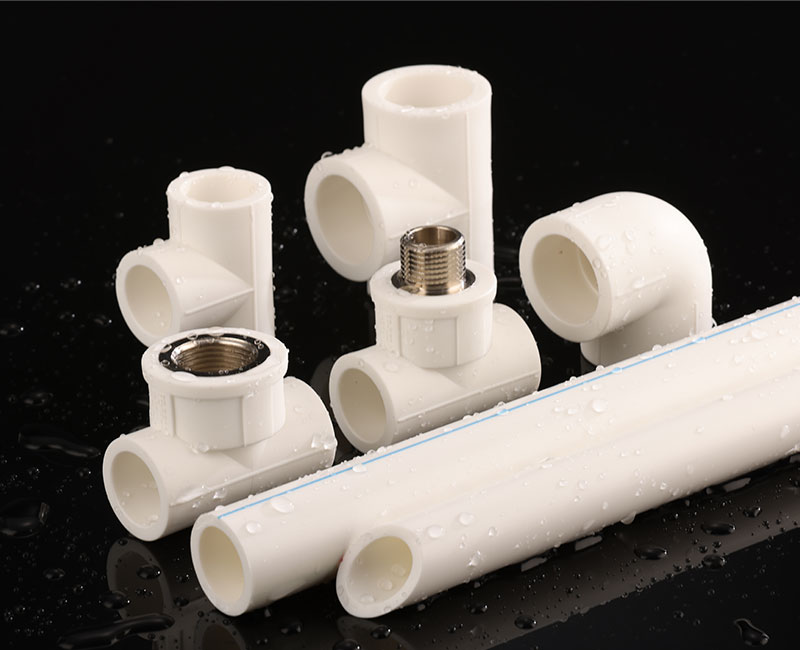
Typical PPR installations may contain:
- elbows;
- tees;
- sockets;
- reducers;
- valves or valve connections;
- threaded transition fittings;
- unions;
- branch connections.
These components should be compatible with the selected pipe series and installation method.
PPR systems are commonly joined through heat fusion, creating a connection between pipe and fitting material when the procedure is carried out correctly.
Joint quality depends on factors such as heating temperature, heating time, insertion depth, alignment, equipment condition, workmanship, and cooling time.
A high-specification pipe cannot compensate for poorly prepared joints.
For this reason, reliable projects treat pipes, fittings, installation tools, and procedures as a complete system.
PPR Pipe for Potable Water Systems
For drinking-water applications, pressure and temperature are only part of the specification.
Material suitability and regulatory requirements must also be considered.
Different markets may apply different drinking-water standards, plumbing codes, health-effect requirements, or certification systems.
For example, NSF explains that NSF/ANSI 14 establishes physical, performance, quality-assurance, marking, and related requirements for plastic piping components, while other NSF standards apply to materials and components in contact with drinking water. You can review the NSF water and plastic piping standards when researching requirements for relevant markets.
This does not mean every PPR product automatically carries a particular certification.
Project teams should always check the actual certificates and standards required for the destination country or project.
How Pipe Diameter Affects Pressure and Flow
Diameter selection affects far more than whether the pipe physically fits the installation.
An undersized pipeline can result in:
- excessive water velocity;
- higher pressure loss;
- noise;
- poor fixture performance;
- inadequate flow at peak demand.
An unnecessarily oversized pipeline may create different hydraulic or system-efficiency issues.
At the same time, pipes with the same outside diameter can have different wall thicknesses depending on their SDR or pressure classification. A thicker wall reduces the available internal diameter, which can affect flow.
Therefore, hydraulic calculations should use the actual internal dimensions of the selected pipe rather than assuming that nominal size alone defines flow capacity.
PPR Temperature and Pressure Selection Example
Consider a simplified building project with three water-system areas.
| System Area | Main Requirement | Selection Priority |
|---|---|---|
| Cold water branch | Moderate temperature | Flow + working pressure |
| Hot water branch | Elevated temperature | Temperature + pressure |
| Hot water circulation main | Continuous heated service | Long-term temperature + pressure |
Even though all three systems could potentially use PPR material, they should not automatically receive identical specifications.
The circulation main deserves particular attention because it may experience elevated temperature for longer periods.
Actual product selection must still follow engineering calculations, local codes, project requirements, and manufacturer technical data.
Common Mistakes When Selecting PPR Pipe
Selecting Only by PN Number
PN classification is useful, but it does not replace evaluation of actual service temperature.
Ignoring Operating Temperature
A pipe selected for cold water should not automatically be assumed suitable for every hot water condition.
Comparing Only Outside Diameter
The same outside diameter can have different wall thicknesses and internal flow areas.
Mixing Incompatible Pipes and Fittings
Compatibility between system components is important for consistent fusion and connection performance.
Ignoring Thermal Expansion
Long hot-water pipe runs require accommodation for temperature-related movement.
Focusing Only on the Pipe
Fittings, joints, supports, valves, and installation workmanship all affect system reliability.
Using Maximum Temperature as Normal Temperature
A short-term or exceptional limit should not automatically be interpreted as a recommended continuous operating condition.
What Information Should Be Confirmed Before PPR Pipe Selection?
Before selecting PPR pipe for an engineering project, prepare the following information:
| Project Information | Why It Matters |
|---|---|
| Application | Defines basic system requirements |
| Cold or hot water | Determines thermal demand |
| Normal temperature | Supports long-term specification |
| Maximum design temperature | Identifies abnormal/peak conditions |
| Working pressure | Determines mechanical requirement |
| Pipe diameter | Controls hydraulic capacity |
| Required flow rate | Helps size the network |
| Pipe series/SDR | Defines wall geometry |
| Required standard | Ensures project compliance |
| Installation method | Affects supports and routing |
| Building height | Influences static pressure |
| Destination market | Determines regulatory requirements |
Providing these details makes product comparison far more accurate than simply requesting “PPR pipe.”
How to Evaluate PPR Pipe for a Project
A practical selection sequence is:
First, define the application. Determine whether the system carries cold water, domestic hot water, circulating hot water, or another permitted medium.
Second, identify temperature conditions. Record normal operating temperature and any credible peak conditions.
Third, calculate pressure. Include system pressure, static head, pump conditions, and other relevant design factors.
Fourth, determine hydraulic size. Select diameter according to required flow and acceptable pressure loss.
Fifth, select the pipe classification. Use the applicable standard and manufacturer data to determine wall thickness, series, SDR, or pressure class.
Sixth, verify fittings and joints. Confirm that the complete piping system is compatible.
Seventh, check installation requirements. Consider support spacing, thermal expansion, routing, and workmanship.
Finally, confirm regulatory requirements. Check whether the project requires particular standards, approvals, or drinking-water certifications.
Following this sequence reduces the risk of choosing a pipe based on a single parameter.
Why PPR Remains Important for Building Water Systems
PPR has remained widely used because its properties align well with many building water-distribution requirements.
Depending on the actual system specification, advantages can include corrosion resistance, relatively smooth internal surfaces, low weight, heat-fusion joining, and suitability for hot and cold water applications.
Bihe currently identifies PP-R as one of its core product lines and supplies multiple PPR series for residential and building piping applications. The company also integrates product selection with technical solution development and project support rather than treating every piping requirement as an identical application.
For engineers and distributors evaluating a PPR system, this broader approach is useful because temperature resistance, pressure capability, pipe dimensions, fittings, and installation must ultimately work together.
Conclusion
PPR pipe high temperature resistance cannot be represented accurately by one temperature number alone.
A reliable specification must consider the relationship between operating temperature, pressure, pipe wall structure, SDR or series, application class, fittings, joints, thermal expansion, and expected service conditions.
For cold water installations, pressure and hydraulic performance may be the main priorities. For hot water and circulation systems, long-term exposure to elevated temperature becomes increasingly important. High-rise buildings add another layer because static pressure and pressure zoning also affect pipe selection.
The safest approach is therefore to evaluate PPR as a complete piping system rather than choosing a product solely by diameter or PN marking.
For project-specific requirements, Bihe can help evaluate pipe specifications according to application, water temperature, operating pressure, diameter, and building conditions through its PPR and building piping solutions.
Frequently Asked Questions
Can PPR pipe be used for hot water?
Yes. Properly specified PPR piping systems are commonly used for hot water distribution. The correct pipe class should be selected according to operating temperature, pressure, service conditions, and the applicable standard.
Does PPR pipe lose pressure resistance at higher temperatures?
Temperature affects the long-term mechanical performance of thermoplastic piping. Therefore, pressure capability should be evaluated together with operating temperature instead of treating the nominal pressure designation as constant under every condition.
What does PN20 mean on PPR pipe?
PN is a nominal pressure classification used to distinguish pipe specifications. It should not be interpreted as an unconditional continuous working pressure at every temperature. Actual service conditions and the applicable standard must also be considered.
Is thicker PPR pipe always better?
No. A thicker wall may support different pressure conditions, but it also reduces internal diameter for the same outside diameter. The appropriate wall thickness depends on hydraulic, temperature, pressure, and system-design requirements.
What is the most important factor when choosing PPR pipe for hot water?
There is no single factor. The most important step is evaluating operating temperature and pressure together, then confirming the appropriate pipe dimensions, fittings, joints, installation method, and applicable standard.
Need Help Selecting the Right PPR Pipe?
Every building water system has different temperature, pressure, diameter, and installation requirements. Provide Bihe with your application, pipe size, operating temperature, pressure requirements, drawings, or technical specifications to receive a more suitable piping recommendation.
Visit Bihe to learn more about its PPR piping systems and engineering pipeline solutions.