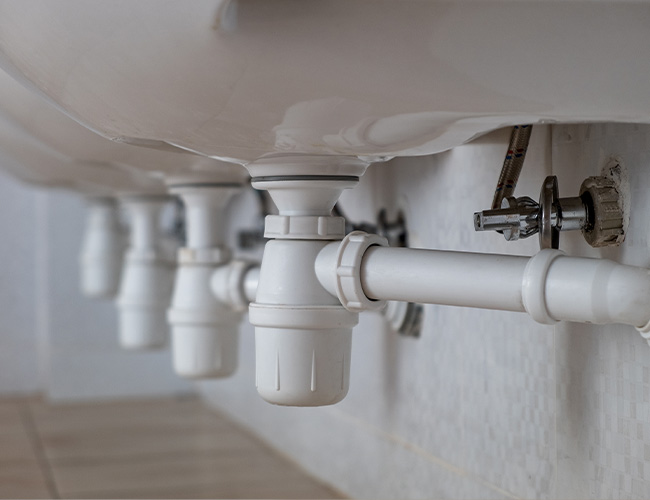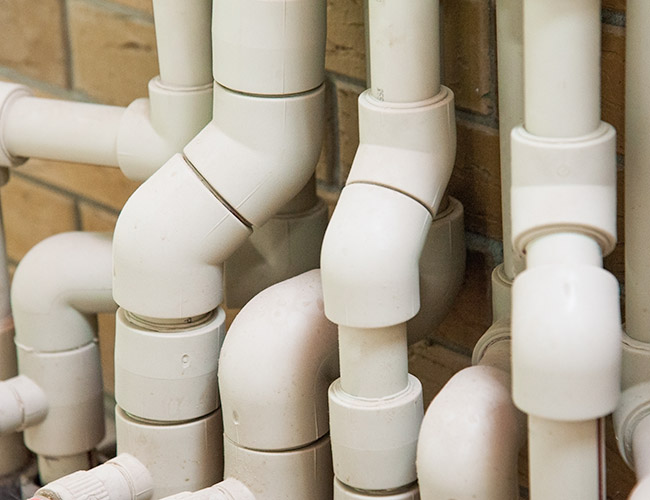
Welcome to our blog. We are a professional manufacturer specializing in high-performance PVC and PP-R piping systems, delivering integrated solutions for municipal engineering, building infrastructure, and residential hot and cold water applications worldwide.
👉 Follow us on Facebook for the latest product updates, technical insights, and real-world project cases.
👉 If you have project requirements or need a quotation, feel free to contact our team for fast response and customized pipeline solutions.
Please continue reading our blog for more industry insights, engineering expertise, and product innovations in advanced piping systems.
Table of Contents
Introduction
- HDPE offers flexibility, impact resistance, and strong adaptability to ground movement.
- PVC provides high rigidity, dimensional stability, and convenient fitting options.
- Pipe diameter alone cannot determine whether a drainage system is suitable.
- Burial depth, traffic load, soil condition, temperature, water chemistry, and joint design must be evaluated.
- Flexible buried pipes rely on both pipe strength and correctly compacted surrounding soil.
- Total project cost includes transportation, fittings, joining, excavation, installation, inspection, and maintenance.
- Project standards and engineering calculations should always take priority over general material comparisons.
Choosing between an HDPE drainpipe and a PVC drainpipe is one of the most common decisions in building, municipal, agricultural, and industrial drainage projects. Both are thermoplastic materials with smooth internal surfaces and strong corrosion resistance, but they behave differently during transportation, installation, and long-term underground operation.
The better material is not simply the one with the highest strength or lowest unit cost. Buyers must consider where the pipe will be installed, what it will carry, how it will be connected, and which external loads it must withstand. This comparison explains those differences and helps project owners prepare a more accurate drainage pipe specification.
What Is an HDPE Drainpipe?
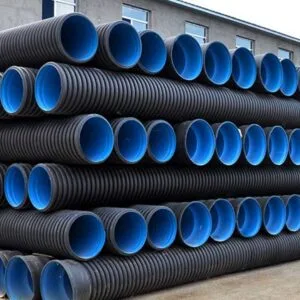
An HDPE drainpipe is manufactured from high-density polyethylene and is commonly used to transport stormwater, sewage, groundwater, and selected industrial liquids. HDPE can be produced as solid-wall pipe, double-wall corrugated pipe, hollow-wall spiral pipe, or steel-reinforced structural-wall pipe.
The material combines toughness and flexibility, allowing the pipe to accommodate limited ground movement without behaving like a completely rigid structure. Its low density also makes large pipes easier to transport and handle than many traditional alternatives.
HDPE Double-Wall Corrugated Pipe
Double-wall corrugated pipe has a smooth inner layer and a profiled outer wall. The inner surface supports hydraulic efficiency, while the corrugated exterior increases resistance to circumferential deformation.
Anhui Bihe’s HDPE double-wall corrugated pipe is available in listed internal diameters from ID200 to ID1200, with multiple ring stiffness classifications for different buried applications.
HDPE Spiral-Wound Pipe
A spiral-wound drainpipe uses a structural profile to create a lightweight but reinforced pipe wall. This manufacturing method is especially useful when projects require larger diameters that may be difficult or uneconomical to produce using conventional extrusion.
The PE hollow-wall spiral pipe offered by Anhui Bihe is designed for large buried municipal, agricultural, and infrastructure drainage systems.
Steel-Reinforced PE Structure
A steel-reinforced PE pipe combines polyethylene corrosion resistance with an embedded steel support structure. It may be considered when a large-diameter underground system requires higher ring stiffness or must operate under demanding external loads.
Anhui Bihe’s PE steel-strip spiral pipe includes listed stiffness classes from SN8 to SN16 and is intended for applications such as municipal drainage, sewage, industrial wastewater, and rainwater transportation.
What Is a PVC Drainpipe?
A PVC drainpipe is made from polyvinyl chloride, usually in an unplasticized form known as PVC-U for rigid drainage applications. The material is commonly used in residential, commercial, and light civil-engineering systems.
PVC-U has a smooth bore, good dimensional consistency, and a broad range of compatible fittings. It is particularly familiar to contractors working with building soil, waste, vent, and rainwater systems.
Rigid Pipe Structure
PVC-U is more rigid than HDPE under typical installation temperatures. This rigidity can help the pipe maintain its shape during handling and installation, but the product must still be correctly bedded and protected from unsuitable point loading.
The pipe class, wall thickness, socket design, and application standard determine whether a PVC product is suitable for above-ground, below-ground, or building drainage.
Socket and Fitting Availability
PVC drainage networks commonly use socketed fittings, rubber-ring joints, or solvent-cement connections. Elbows, tees, reducers, traps, and access fittings are widely available for many building drainage configurations.
Not Every PVC Pipe Is Interchangeable
A PVC electrical conduit, water-supply pipe, and drainage pipe may look similar, but they are manufactured for different functions. Buyers must confirm the intended application, applicable standard, wall class, joint type, and temperature range before ordering.
HDPE Drainpipe vs PVC Drainpipe Comparison
| Comparison factor | HDPE drainpipe | PVC drainpipe |
|---|---|---|
| Material behavior | Flexible and tough | Rigid and dimensionally stable |
| Impact resistance | Generally strong, including at lower temperatures | Depends strongly on formulation and temperature |
| Corrosion resistance | Resistant to many soils and drainage liquids | Resistant to many soils and common drainage liquids |
| Typical joint options | Butt fusion, electrofusion, rubber ring, heat-shrink connection | Rubber ring, push-fit socket, solvent cement |
| Large-diameter availability | Well suited to structural-wall and spiral-wound designs | Common in small and medium sizes; availability depends on supplier |
| Ground-movement tolerance | Good when properly designed and installed | More limited because of higher rigidity |
| Handling | Lightweight and less prone to brittle handling damage | Lightweight but requires protection from severe impact |
| Internal surface | Smooth | Smooth |
| Installation temperature | Maintains toughness across a broad range, depending on grade | Low temperatures may increase impact sensitivity |
| Field modification | Requires suitable cutting and joining procedures | Usually easy to cut and connect with compatible fittings |
| Typical applications | Municipal drainage, buried sewage, stormwater, agriculture and industry | Building drainage, roof water, residential sewage and selected underground systems |
| Key design factor | Ring stiffness, SDR, joints and pipe-soil interaction | Pipe class, wall thickness, joints and bedding |
The table provides a general comparison rather than a final engineering specification. Actual performance depends on product grade, dimensions, manufacturing quality, installation, and compliance with the required standard.
Which Drainpipe Handles Underground Loads Better?
Neither material can be judged by material name alone. Structural performance depends on pipe diameter, wall profile, stiffness classification, burial depth, soil, groundwater, trench geometry, backfill compaction, and traffic load.
An HDPE structural-wall pipe can achieve substantial ring stiffness while remaining relatively lightweight. A PVC drainpipe may provide higher inherent rigidity, but it still requires uniform bedding and correctly placed sidefill.
Ring Stiffness
Ring stiffness describes a thermoplastic pipe’s resistance to deformation under a defined external loading test. Classes such as SN4, SN8, SN10, SN12.5, and SN16 may be available, depending on the product and applicable standard.
A higher number does not automatically mean that the product is the best choice. Selecting an unnecessarily high class can increase material use without correcting poor trench design or inadequate compaction.
Burial Depth
A deeply buried line experiences significant soil loading, while a shallow pipe beneath a road may face concentrated vehicle loads. Both situations require structural calculations rather than a general material recommendation.
Pipe-Soil Interaction
Flexible buried pipes transfer part of the applied load into the surrounding compacted soil. The drainpipe, bedding, sidefill, and native ground therefore operate as one structural system.
Poor compaction around the lower sides of a pipe can allow excessive deformation even when the correct product class was ordered. Installation requirements should be included in the technical specification, not left entirely to site judgment.
Which Material Provides Better Flow Performance?
Both HDPE and PVC can provide smooth internal surfaces that reduce flow resistance compared with rough or corroded traditional pipelines. However, hydraulic capacity must be calculated using the actual internal diameter rather than nominal size alone.
A structural-wall HDPE product and a solid-wall PVC product with similar nominal dimensions may have different internal flow areas. Buyers should request dimensional tables before comparing pipe capacity.
Internal Diameter
Some pipes are classified by nominal outside diameter, while others are identified by nominal inside diameter. Confusing these systems can result in a drainage line with less flow capacity than expected.
The inquiry should clearly state whether the project requires a minimum internal diameter, outside diameter, or nominal diameter under a particular standard.
Pipe Gradient
Gravity systems depend on slope to move water and suspended solids. A slope that is too low can encourage sediment accumulation, while excessive velocity may increase abrasion or create downstream hydraulic problems.
The required gradient should be determined according to flow rate, pipe roughness, diameter, solids content, local regulations, and access for maintenance.
Joint Alignment
A joint that creates an internal step or gap can disturb flow and trap solids. Correct pipe-end preparation, alignment, gasket positioning, and inspection help maintain a continuous flow path.
HDPE vs PVC Connection Methods
Joint selection affects leakage control, construction speed, equipment requirements, repairability, and long-term performance. It should be considered at the same time as pipe material.
HDPE Fusion Joints
Butt fusion joins prepared HDPE pipe ends by heating and pressing them together under controlled conditions. When performed correctly, it creates a continuous connection with few potential leakage paths.
Electrofusion uses fittings containing electrical heating elements. It is useful in certain confined spaces and repair situations but requires compatible fittings, controlled scraping, clean surfaces, and trained operators.
HDPE Rubber-Ring and Heat-Shrink Joints
Double-wall corrugated products may use rubber-ring socket connections for efficient field installation. Certain large spiral-wound products may use electrofusion tape or heat-shrink sleeves.
These systems can reduce heavy jointing equipment requirements, but installers must follow the manufacturer’s preparation, heating, insertion, and inspection procedures.
PVC Socket Joints
PVC drainage systems frequently use push-fit sockets with elastomeric seals. This method is quick and allows limited movement when the pipe is correctly inserted and aligned.
Solvent-cement joints are also used in appropriate smaller-diameter systems. The pipe and fitting must be compatible, clean, dry, and assembled using the specified cement and procedure.
Which Joint Is More Leak-Resistant?
A properly completed fusion joint can provide high continuity in an HDPE system. A correctly installed gasketed PVC or HDPE joint can also provide reliable drainage performance.
Material choice alone does not prevent leakage. Joint design, pipe-end quality, installer competence, cleanliness, alignment, and inspection are decisive factors.
Which Drainpipe Is Better in Cold Weather?
HDPE generally retains useful toughness at low temperatures and can tolerate construction handling better than many rigid plastics. This characteristic makes it attractive for projects in colder climates or installations where impact during handling is a concern.
PVC can also perform reliably within its specified temperature range, but its impact behavior may become more sensitive as temperature decreases. Storage and handling procedures should follow the product manufacturer’s requirements.
Hot-Weather Installation
High temperatures can make thermoplastic pipes more flexible and increase thermal expansion. Long pipes exposed to direct sunlight should be allowed to stabilize before final alignment and connection.
Temperature Is Not the Same as UV Resistance
A pipe may tolerate high operating temperatures but still require protection from prolonged ultraviolet exposure. Buyers should confirm allowable outdoor storage periods and whether the product contains suitable UV stabilization.
Chemical and Corrosion Resistance
HDPE and PVC do not rust like unprotected steel. This gives both materials an advantage in wet soil, sewage, rainwater, and many agricultural environments.
Chemical compatibility still depends on concentration, temperature, exposure duration, and the specific material formulation. Industrial buyers should provide a complete liquid composition rather than describing the application only as wastewater.
Industrial Wastewater
Industrial effluent may contain solvents, acids, alkalis, oils, salts, or suspended abrasive particles. The pipe body, gasket, fitting, and jointing material must all be checked for compatibility.
Anhui Bihe’s industrial facility pipe systems cover pipeline applications involving fluids and more demanding industrial environments.
Stormwater Pollution
Stormwater is not always clean. The U.S. Environmental Protection Agency notes that runoff from roads, parking areas, construction sites, and other developed surfaces can carry sediment, chemicals, and waste into water bodies.
Abrasive Solids
Sand, grit, and mineral particles can wear the inner surface of a drainage line. Flow velocity, particle size, concentration, pipe geometry, and maintenance frequency should be considered when abrasion is expected.
Drainpipe Installation Comparison
HDPE’s lighter weight and flexibility can simplify transportation and handling, especially for larger diameters. Longer lengths may also reduce the number of joints required in some installations.
PVC’s rigidity and familiar socketed components can make it convenient for compact building layouts. However, both materials require suitable trench preparation and protection from construction damage.
Bedding Preparation
The trench bottom should provide uniform support without sharp stones, frozen lumps, or hard projections. Local engineering requirements determine whether granular bedding is required.
Sidefill and Compaction
Sidefill should be placed evenly around the pipe and compacted according to the approved installation design. Careless machine compaction directly above a pipe can damage it or produce uneven deformation.
Groundwater Control
Groundwater can destabilize the trench, wash away fine bedding material, or create flotation forces before backfilling is complete. Dewatering and anti-flotation measures may therefore be necessary.
Inspection Before Backfilling
Pipe alignment, joint completion, invert level, cleanliness, and visible damage should be checked before the pipe is covered. Photographing joints and recording installation data can improve project traceability.
Which Material Has the Lower Total Project Cost?
A fair cost comparison should include more than the price per meter. Freight, unloading, machinery, fittings, labor, installation speed, testing, maintenance, and failure risk all influence total expenditure.
HDPE may reduce lifting and transportation requirements in larger systems. Fusion joints may add equipment and skilled-labor requirements, while socketed structural-wall products can provide faster installation in suitable projects.
PVC often benefits from familiar installation tools and widely available fittings in building systems. Its cost advantage may decrease if the project requires special protection, uncommon sizes, or extensive adaptation.
Purchase Cost
Pipe wall design, stiffness class, diameter, raw material, production standard, and order volume influence the quotation. Two visually similar products may not have equivalent dimensions or performance.
Installation Cost
Installation expenses include excavation, dewatering, bedding, lifting, cutting, connection, backfill, compaction, testing, and site restoration. A higher-quality pipe system that installs efficiently may provide better overall value.
Cost of Failure
Underground repair may require road closure, excavation, pumping, replacement materials, and surface reconstruction. Joint reliability and installation quality can therefore be more important than a small initial saving.
How to Choose Between HDPE and PVC Drainpipe
Use the following selection logic as a procurement reference:
| Project condition | Material commonly considered | Reason |
|---|---|---|
| Large municipal stormwater line | HDPE structural-wall pipe | Large diameter, low weight and multiple stiffness options |
| Residential soil and waste system | PVC-U | Compact fittings and familiar building installation |
| Area with ground settlement | HDPE | Flexibility and joint options can accommodate controlled movement |
| Large roof drainage network | PVC or HDPE | Final choice depends on capacity, layout and local standards |
| Buried pipe beneath traffic | Engineered HDPE or PVC system | Structural class and installation design are more important than material name |
| Corrosive industrial environment | HDPE or compatible PVC | Chemical concentration and temperature must be verified |
| Very large-diameter sewage project | Spiral-wound or reinforced HDPE | Structural-wall production supports larger dimensions |
| Cold-weather construction | HDPE is often preferred | Good impact performance at lower temperatures |
| Small building renovation | PVC-U is often convenient | Easy cutting and broad fitting availability |
This table is not a substitute for engineering approval. Local codes, project standards, hydraulic calculations, and structural analysis should determine the final system.
Drainpipe Quality Checklist for Buyers
Before placing an order, ask the manufacturer to confirm:
- Pipe material and raw material grade
- Intended drainage application
- Applicable product and testing standard
- Nominal, internal, and external dimensions
- Wall thickness or wall-profile dimensions
- Ring stiffness, SDR, or pressure classification
- Standard pipe length
- Joint type and fitting compatibility
- Gasket or welding-material specification
- Allowable operating temperature
- Chemical compatibility
- Installation and storage requirements
- Product marking and batch identification
- Dimensional inspection report
- Mechanical performance test report
- Packaging and container-loading method
- Technical support and warranty scope
The ISO standards catalogue for external sewage systems provides an overview of international drainage and sewerage standards. The project country may also require EN, ASTM, AASHTO, GB, or other national specifications.
Common Selection Mistakes
Choosing by Material Name Alone
“HDPE” or “PVC” does not provide enough information to approve a pipe. The specification must also identify dimensions, structural class, standard, joint type, and installation condition.
Ignoring the Actual Inside Diameter
Nominal size can refer to different dimensional systems. Comparing the actual flow diameter prevents unexpected hydraulic capacity differences.
Selecting the Highest Stiffness Without Calculation
A higher stiffness class cannot compensate for poor bedding, unsuitable backfill, or incorrect compaction. Structural selection should reflect actual installation loads.
Mixing Pipes and Fittings from Unverified Systems
Components with similar dimensions may have different tolerances or sealing designs. Joint compatibility should be confirmed before bulk shipment.
Treating Installation as a Separate Issue
The final performance of a buried drainpipe depends heavily on trench construction. The product specification and installation specification should be prepared together.
Conclusion
HDPE is generally the stronger candidate for large-diameter underground drainage, projects involving ground movement, cold-weather handling, and municipal or industrial infrastructure. Structural-wall designs also allow manufacturers to combine high ring stiffness with manageable product weight.
PVC is often a practical option for residential and commercial building drainage, smaller underground networks, and projects that benefit from rigid pipes and readily available socket fittings. Its suitability still depends on the correct class, joint type, temperature, and installation method.
The best choice is the system that satisfies hydraulic, structural, environmental, and construction requirements with the lowest acceptable life-cycle risk. Buyers comparing options can review Anhui Bihe’s drainage pipe series or submit project dimensions, quantities, standards, and installation conditions through the contact page.
FAQ
Is HDPE drainpipe better than PVC for underground use?
HDPE is often preferred for large buried systems because of its flexibility, impact resistance, and structural-wall options. PVC can also perform well underground when the correct pipe class, bedding, loading design, and installation method are used.
Which drainpipe is best for heavy rain?
The best product is one that provides the calculated flow capacity and appropriate structural strength. Catchment area, rainfall intensity, runoff coefficient, pipe gradient, internal diameter, and outlet conditions must be evaluated.
Can I connect an HDPE drainpipe to a PVC pipe?
Yes, transition fittings or approved mechanical couplings may be available. The connection must accommodate differences in outside diameter, stiffness, thermal movement, and joint design.
Does HDPE drainpipe need concrete bedding?
Not always. Many HDPE systems use approved granular bedding and compacted sidefill, but concrete support may be required in specific structures or difficult site conditions.
Is PVC drainpipe suitable under a road?
It may be suitable if its structural class, burial depth, trench design, backfill, and compaction are engineered for the expected traffic load. The word “PVC” alone is not enough to confirm suitability.
What does SN8 mean on an HDPE drainpipe?
SN8 is a nominal ring stiffness class used for certain thermoplastic pipes. It describes tested circumferential stiffness but does not independently determine the allowable burial depth.
Does a corrugated drainpipe carry less water than a smooth pipe?
A double-wall corrugated product normally has a corrugated exterior and a smooth interior. Flow capacity should be calculated using its actual internal diameter and specified hydraulic roughness.
Which pipe is easier to install, HDPE or PVC?
PVC is often convenient in compact building systems because of its rigid form and socket fittings. HDPE may be easier to handle in long or large-diameter underground installations, although fusion systems require suitable equipment and trained operators.
How do I request an accurate drainpipe quotation?
Provide the application, material preference, internal diameter, stiffness or pressure rating, standard, pipe length, quantity, joint type, burial depth, soil conditions, destination, and delivery schedule. Drawings and tender specifications can improve quotation accuracy.
How long does a plastic drainpipe last underground?
Service life depends on material quality, loading, temperature, chemical exposure, joints, installation, and maintenance. Buyers should evaluate the manufacturer’s documented design basis rather than relying on a universal lifespan claim.