Welcome to our blog. We are a professional manufacturer specializing in high-performance PVC and PP-R piping systems, delivering integrated solutions for municipal engineering, building infrastructure, and residential hot and cold water applications worldwide.
👉 Follow us on Facebook for the latest product updates, technical insights, and real-world project cases.
👉 If you have project requirements or need a quotation, feel free to contact our team for fast response and customized pipeline solutions.
Please continue reading our blog for more industry insights, engineering expertise, and product innovations in advanced piping systems.
Table of Contents
- Drainpipe size should be calculated from expected flow rather than selected from nominal diameter alone.
- Stormwater sizing depends on rainfall intensity, drainage area, surface type, pipe slope, and outlet conditions.
- Wastewater systems require peak discharge, solids content, minimum velocity, and future capacity to be considered.
- Internal diameter determines flow area, while outside diameter affects fittings and trench dimensions.
- Pipe slope can improve capacity, but an excessive gradient may create high velocities and downstream problems.
- Ring stiffness affects structural performance rather than hydraulic capacity.
- Large-diameter HDPE structural-wall pipes are widely used in municipal, industrial, and agricultural drainage.
- Final sizing should be confirmed by a qualified engineer according to local standards.
Introduction
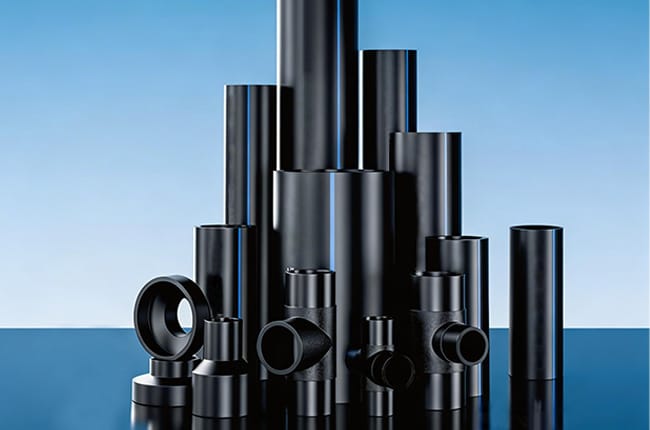
Selecting the right drainpipe size is more complicated than matching a pipe to an outlet opening. A drainage line must carry the expected water volume while maintaining acceptable velocity, resisting external loads, and fitting the available installation space.
An undersized pipe may cause ponding, surcharge, overflow, or upstream flooding during peak conditions. An oversized pipe increases material, excavation, transportation, and installation requirements and may not maintain sufficient velocity during normal operation.
This guide explains the main sizing concepts in practical language. It also shows how internal diameter, flow rate, slope, material, ring stiffness, and site conditions should be evaluated together.
What Does Drainpipe Size Actually Mean?
Drainpipe size may refer to nominal diameter, internal diameter, or outside diameter. These measurements are related, but they are not necessarily identical.
A product described as DN300, ID300, or OD300 may have a different usable flow area depending on its dimensional standard and wall structure. Project specifications should therefore define which measurement system is required.
Nominal Diameter
Nominal diameter is a standardized size designation used to identify pipes and compatible components. It does not always represent an exact physical measurement.
Two products with the same nominal size may have different wall thicknesses and internal diameters. Buyers should confirm the manufacturer’s dimensional table rather than assuming equal flow capacity.
Internal Diameter
Internal diameter determines the cross-sectional area available for water flow. It is one of the most important values in hydraulic calculations.
A relatively small reduction in internal diameter can produce a meaningful reduction in capacity. This is why comparing pipe products solely by outside diameter can lead to an incorrect selection.
Outside Diameter
Outside diameter influences fittings, couplings, trench dimensions, wall thickness, and connection compatibility. Many solid-wall thermoplastic pipes are classified according to outside diameter.
Structural-Wall Pipe Dimensions
Corrugated and spiral-wound products use shaped walls to provide structural strength while controlling material use. Their nominal size may be based on internal or external diameter, depending on the product standard.
Why Drainpipe Size Matters
Correct sizing helps a drainage system move water safely without creating unnecessary construction requirements. It also influences maintenance frequency, sediment behavior, joint selection, and long-term operating reliability.
According to the general definition of drainage, drainage includes the removal of both surface water and subsurface water. Because these water sources behave differently, the same sizing method cannot be applied to every project without adjustment.
Capacity During Peak Flow
A stormwater system may carry little or no water during dry periods but experience a sudden high flow during heavy rain. The selected pipe must accommodate the project’s design storm and allowable surcharge conditions.
Wastewater systems usually have more regular flow, although morning, evening, commercial, or industrial discharge can create substantial peaks.
Flow Velocity
Water must move fast enough to reduce sediment deposition but not so fast that it damages pipe surfaces, joints, outlets, or downstream structures. Acceptable velocity limits depend on pipe material, water type, solids content, and local design requirements.
Maintenance Access
Larger pipes are not automatically maintenance-free. Inspection chambers, manholes, cleanouts, flushing points, and suitable junction geometry are still needed.
Future Capacity
New buildings, paved areas, industrial processes, or network extensions may increase future flow. A reasonable allowance can be included, but excessive oversizing should be avoided because it may reduce normal-flow velocity.
Drainpipe Size Comparison
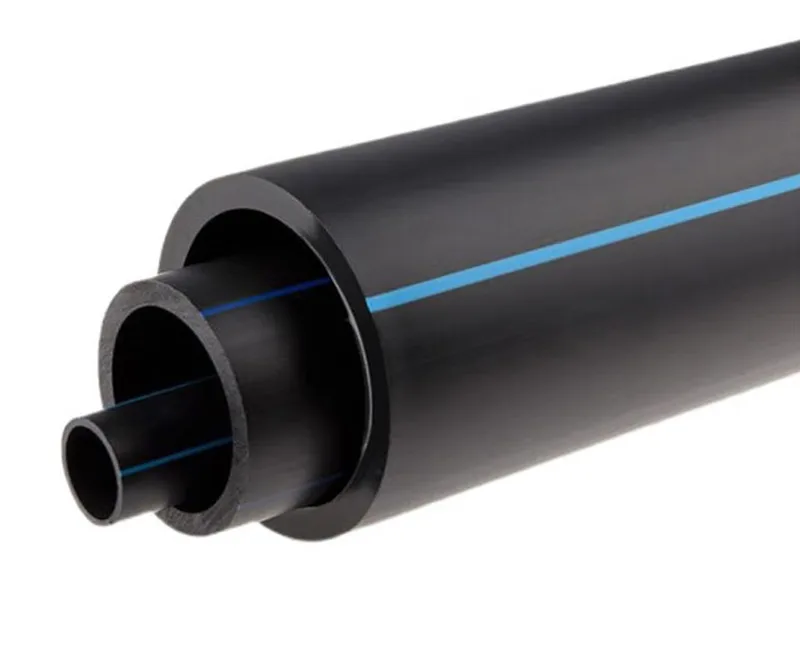
The following ranges are general planning references, not universal design recommendations. Final sizes must be calculated and checked against local regulations.
| Nominal size range | General application examples | Main sizing considerations |
|---|---|---|
| 50–100 mm | Small appliance waste, condensate and limited building drainage | Fixture discharge, blockage risk and local plumbing rules |
| 100–160 mm | Residential soil, waste and small rainwater lines | Connected fixtures, roof area, slope and access |
| 200–300 mm | Commercial drainage, site runoff and small municipal branches | Peak flow, sediment, traffic load and burial depth |
| 300–600 mm | Municipal stormwater, sewage and industrial discharge | Catchment size, hydraulic grade line and ring stiffness |
| 600–1200 mm | Major collectors, road drainage and infrastructure systems | Network modeling, groundwater, installation and external load |
| Above 1200 mm | Large trunk sewers, flood-control and major infrastructure | Detailed hydraulic modeling, structures, transport and site assembly |
A size used successfully on one project may be unsuitable for another. Rainfall, slope, water source, pipe material, joint geometry, and outlet level can all change the required diameter.
How to Calculate Stormwater Drainpipe Size
Stormwater sizing begins with the quantity of runoff entering the system. The calculation normally considers rainfall intensity, catchment area, surface characteristics, inlet capacity, storage, and the permitted level of flooding risk.
The U.S. EPA’s Storm Water Management Model is used for planning and designing stormwater, combined sewer, sanitary sewer, and other drainage systems. It can simulate pipes, channels, storage units, pumps, weirs, surcharging, backwater, and surface ponding.
Determine the Catchment Area
The catchment is the total area contributing water to a particular inlet or pipe section. It may include roofs, roads, parking areas, paved yards, landscaped ground, and upstream drainage branches.
Each downstream section generally receives water from a larger total area. The pipe diameter may therefore increase as the network approaches its final outlet.
Select the Design Rainfall
Rainfall intensity should come from an approved local source and correspond to the required storm duration and return period. A roof drainage line, highway culvert, and critical flood-control system may use different design criteria.
Historical averages alone are not enough for peak-flow design. Engineers should use current local guidance and consider whether the project requires an allowance for changing rainfall patterns.
Evaluate the Surface Type
Hard surfaces such as roofs, concrete, and asphalt generate more immediate runoff than planted or permeable areas. Soil condition, ground slope, vegetation, and existing storage also affect how much rainfall reaches the pipe.
Inlet Capacity Can Limit the System
A large underground drainpipe cannot solve a problem caused by inadequate surface inlets. Grates, gutters, channels, and catch basins must collect and transfer water into the pipe network effectively.
How to Size a Wastewater Drainpipe
Wastewater sizing is based on expected discharge, peak-use patterns, solids transport, ventilation, and local sanitary regulations. The selected pipe must also provide access for inspection and cleaning.
Domestic wastewater, commercial discharge, and industrial effluent have different flow characteristics. Industrial applications may require additional evaluation of temperature, chemicals, suspended solids, and intermittent batch discharge.
Peak Discharge
Peak discharge represents the highest expected flow during a defined period. It may be estimated from fixtures, population, process equipment, operating schedules, or measured site data.
Using average daily flow alone can underestimate the required capacity. Short-duration peaks can control the final pipe size.
Solids and Sediment
Wastewater containing solids requires sufficient flow depth and velocity to reduce accumulation. Poor alignment, excessive junction angles, internal joint steps, and flat sections can increase blockage risk.
Infiltration and Inflow
Groundwater can enter a sewer through damaged joints, cracks, or inspection structures. Rainwater may also enter through unsuitable connections or leaking covers.
Separate and Combined Networks
Separate systems use different networks for stormwater and sanitary wastewater. Combined systems carry both flows and may require significantly greater wet-weather capacity, storage, or overflow management.
How Pipe Slope Affects Drainpipe Capacity
Gravity flow depends on the difference in elevation between the upstream and downstream ends. Increasing the slope generally increases velocity and capacity, but slope should not be treated as a substitute for correct diameter.
The hydraulic grade line, downstream water level, junction losses, bends, and possible surcharge must also be considered. A pipe with an adequate gradient can still back up if its outlet is submerged or restricted.
A Slope That Is Too Shallow
A shallow slope may produce low velocity and allow sand, silt, or organic material to settle. Deposits gradually reduce the available flow area and can increase maintenance requirements.
A Slope That Is Too Steep
A steep line may produce high velocity, particularly when carrying water with abrasive particles. Energy dissipation, outlet protection, joint stability, and downstream erosion may then become important.
Manning’s Equation
Manning’s equation is commonly used to estimate gravity flow in open channels and partially or fully flowing pipes. It considers flow area, hydraulic radius, slope, and a roughness coefficient associated with the internal surface.
Use the Correct Roughness Value
Published roughness values are not a substitute for project judgment. Pipe condition, joints, sediment, aging, fittings, and construction tolerances can affect actual hydraulic behavior.
Partial Flow Versus Full Flow
Gravity sewer pipes often operate partially full during normal conditions. The remaining air space supports ventilation and provides temporary capacity during higher flows.
A storm line may run full or become surcharged during a design event. Engineers must determine whether this is acceptable and whether the resulting water level could flood upstream structures.
Dry-Weather Flow
Large municipal and combined networks may experience relatively low flow between rainfall events. Pipe size and slope should support sediment transport under ordinary operating conditions.
Peak Wet-Weather Flow
During heavy rain, surface runoff and infiltration can quickly increase network flow. Downstream restrictions may cause water to rise in manholes and connected branches.
Backwater Conditions
Backwater occurs when downstream water levels restrict normal discharge. It can be caused by a full receiving sewer, high river level, tide, blocked outlet, or undersized downstream pipe.
Selecting HDPE Drainpipe Sizes
HDPE drainage products are available in solid-wall and structural-wall designs. Structural-wall pipes use corrugations, hollow profiles, or reinforcement to achieve the required stiffness with a manageable pipe weight.
Anhui Bihe’s drainage pipe series includes double-wall corrugated, solid-wall, hollow-wall spiral, Krah, and steel-strip-reinforced options.
HDPE Double-Wall Corrugated Sizes
The HDPE double-wall corrugated pipe combines a smooth inner surface with a corrugated outer wall. The listed range covers ID200 to ID1200, with SN4, SN8, SN10, and SN12.5 stiffness classes.
| Nominal internal diameter | Listed minimum average outside diameter | Listed stiffness options |
|---|---|---|
| ID200 | 195 mm | SN4, SN8, SN10, SN12.5 |
| ID300 | 294 mm | SN4, SN8, SN10, SN12.5 |
| ID400 | 392 mm | SN4, SN8, SN10, SN12.5 |
| ID500 | 490 mm | SN4, SN8, SN10, SN12.5 |
| ID600 | 588 mm | SN4, SN8, SN10, SN12.5 |
| ID800 | 785 mm | SN4, SN8, SN10, SN12.5 |
| ID1000 | 985 mm | SN4, SN8, SN10, SN12.5 |
| ID1200 | 1185 mm | SN4, SN8, SN10, SN12.5 |
These dimensions are useful for preliminary comparison. Project specifications and current technical documentation should be confirmed before production.
Large-Diameter Spiral Pipe
Spiral-wound products are suitable when municipal or industrial systems require greater diameters. Anhui Bihe’s PE hollow-wall spiral range includes listed sizes extending to 3000 mm for large underground projects.
Steel-Strip-Reinforced Sizes
The PE steel-strip spiral pipe is listed in internal diameters from 300 to 2000 mm. Its steel-plastic structural wall supports stiffness classes up to SN16 for demanding buried installations.
Size and Stiffness Are Different Decisions
Hydraulic calculations determine the required internal diameter, while structural calculations help determine the necessary wall design and ring stiffness. Increasing stiffness does not increase the flow area if the internal diameter remains unchanged.
Ring Stiffness, Burial Depth, and Pipe Size
Ring stiffness measures resistance to circumferential deformation under specified test conditions. It is a structural property rather than a direct indicator of drainage capacity.
A large pipe may require careful structural evaluation because its wall responds differently to soil and live loading. Burial depth, trench width, soil type, groundwater, traffic, and compaction must all be considered.
Shallow Installation Under Traffic
A shallow line beneath a road may experience concentrated wheel loads. The pipe class, cover material, pavement structure, and load distribution must be assessed together.
Deep Burial
Deeply installed pipes experience greater soil loading, although uniform well-compacted soil can provide valuable side support. Construction sequence and trench stability become increasingly important.
Groundwater and Flotation
A large empty pipe can be vulnerable to flotation when groundwater rises. Temporary restraint, controlled backfilling, drainage, or permanent anti-flotation measures may be required.
Flexible Pipe-Soil System
An HDPE drainpipe is designed to interact with the surrounding soil. Uniform bedding and properly compacted sidefill help control deformation and distribute external loads.
Common Drainpipe Sizing Mistakes
Using Roof Area Alone
Roof area is only one input in stormwater design. Rainfall intensity, outlet quantity, gutter capacity, pipe slope, fittings, and downstream restrictions also affect performance.
Treating Nominal Diameter as Exact
Nominal dimensions do not always equal actual internal measurements. Product drawings should be checked before hydraulic calculations are finalized.
Ignoring Downstream Capacity
Increasing an upstream pipe size may simply move flooding to a downstream restriction. The complete drainage network should be evaluated as a connected system.
Choosing Pipe Size Before Setting Levels
Available gradient depends on inlet and outlet elevations. Selecting the diameter before confirming levels can create an impractical or inefficient layout.
Oversizing Without Reviewing Velocity
A larger pipe may carry more water, but it can reduce depth and velocity during normal conditions. This may increase sediment accumulation in wastewater or dirty stormwater systems.
Drainpipe Sizing Information to Send a Manufacturer

A clear technical inquiry should include:
- Drainage application and water type
- Required product standard
- Calculated design flow
- Minimum internal diameter
- Preferred material and wall structure
- Pipe slope and total length
- Required ring stiffness or pressure class
- Installation depth
- Trench and soil conditions
- Groundwater level
- Vehicle or external loading
- Operating temperature
- Chemical and sediment exposure
- Connection method
- Fittings and inspection structures
- Quantity and standard pipe length
- Project location and delivery schedule
- Required test reports and product marking
Anhui Bihe’s municipal engineering pipeline solutions cover drainage and infrastructure applications where hydraulic capacity and underground structural performance must be considered together.
Conclusion
Correct drainpipe sizing begins with design flow and ends with verification of the entire installed system. Internal diameter, slope, roughness, peak flow, downstream conditions, and maintenance requirements determine hydraulic performance.
Structural selection is a separate but connected task. Ring stiffness, burial depth, soil support, groundwater, and traffic loading determine whether the selected diameter can operate reliably underground.
A productive specification should identify both the required flow size and structural class. Project teams can submit drawings, flow requirements, dimensions, and installation conditions through Anhui Bihe’s contact page for a suitable drainage pipe configuration.
FAQ
How do I know what size drainpipe I need?
Start with the maximum expected flow, water source, pipe length, slope, and downstream outlet level. Stormwater calculations also require rainfall intensity and catchment characteristics. The final internal diameter should be checked for capacity, velocity, surcharge, sediment, and local regulatory requirements.
Is a 100 mm drainpipe large enough for rainwater?
A 100 mm line may be suitable for some small roof or site drainage applications, but it cannot be selected from diameter alone. Roof area, local rainfall intensity, pipe gradient, number of bends, inlet capacity, and downstream conditions must be calculated before confirming suitability.
Does increasing drainpipe slope allow me to use a smaller pipe?
A greater slope can increase gravity-flow capacity, but reducing diameter may raise velocity, blockage sensitivity, and hydraulic losses at bends or junctions. Available levels, outlet protection, solids content, maintenance access, and local minimum-size rules must also be evaluated.
What is the difference between ID and OD in drainpipe sizes?
ID means internal diameter and determines the approximate area available for flow. OD means outside diameter and affects fittings, couplings, wall thickness, and trench space. Pipes with the same OD can have different IDs, so hydraulic comparisons should use verified internal dimensions.
What drainpipe size is suitable for municipal drainage?
Municipal systems may range from small branch pipes to trunk lines several meters in diameter. There is no universal size because catchment area, design storm, network layout, slope, backwater, traffic load, burial depth, and future development all influence the final engineering decision.