Welcome to our blog. We are a professional manufacturer specializing in high-performance PVC and PP-R piping systems, delivering integrated solutions for municipal engineering, building infrastructure, and residential hot and cold water applications worldwide.
👉 Follow us on Facebook for the latest product updates, technical insights, and real-world project cases.
👉 If you have project requirements or need a quotation, feel free to contact our team for fast response and customized pipeline solutions.
Please continue reading our blog for more industry insights, engineering expertise, and product innovations in advanced piping systems.
Table of Contents
A drainpipe may look like a simple construction product, but selecting the wrong system can lead to deformation, blocked flow, leaking joints, ground settlement, and expensive excavation. Buyers in 2026 must consider hydraulic performance, structural strength, installation efficiency, environmental exposure, and long-term maintenance together.
This guide explains how to compare drainage pipes for residential, commercial, municipal, agricultural, and industrial projects. It also shows which questions to ask a manufacturer before approving a quotation.
What Is a Drainpipe?
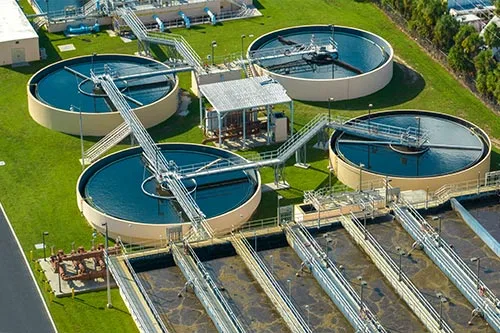
A drainpipe is a pipe designed to remove rainwater, groundwater, wastewater, or other unwanted liquid from a building, site, road, field, or underground infrastructure system. It may operate as part of a gravity drainage network or, in some projects, as part of a pumped or pressurized system.
According to the general definition of drainage, drainage is the natural or artificial removal of surface water and subsurface water from an area. This broad definition explains why pipe selection must begin with the source and destination of the water—not simply the required diameter.
Surface Water Drainage
Surface water systems collect runoff from roofs, roads, parking areas, and other hard surfaces. The selected drainpipe must handle peak rainfall without creating unacceptable ponding or overflow.
The U.S. EPA explains that runoff is generated when rain or snowmelt flows across impervious surfaces instead of soaking into the ground. Buyers can review the EPA’s overview of urbanization and stormwater runoff for additional environmental context.
Underground Gravity Drainage
An underground gravity line transports water through a controlled slope rather than continuous mechanical pressure. Its performance depends on internal diameter, gradient, inner-wall roughness, joint alignment, bedding quality, and resistance to external loads.
For municipal procurement, explore Anhui Bihe’s complete drainage pipe series to compare structural-wall and solid-wall solutions.
Foul Water and Sewerage
Foul water contains discharge from toilets, kitchens, sanitary facilities, or industrial processes. A pipe carrying this water requires dependable joints, chemical resistance, suitable access points, and compliance with local sewerage regulations.
Stormwater Is Not Always Wastewater
Stormwater and sanitary wastewater should not automatically be treated as the same design flow. They may have different contamination levels, peak-flow patterns, treatment requirements, and permitted discharge locations.
Drainpipe Applications Buyers Should Define First
Before comparing materials or requesting quotations, describe the actual application. The same product will not perform equally well in every site condition.
Residential Buildings
Residential systems generally manage roof runoff, kitchen and bathroom discharge, and foundation drainage. Ease of cutting, fitting availability, noise control, and compatibility with building codes are common purchasing factors.
Roof and Downpipe Connections
Roof drainage is influenced by roof area, rainfall intensity, gutter capacity, and outlet quantity. The underground line must also be large enough to accept water from all connected downpipes.
Foundation Drainage
Foundation systems usually collect groundwater before it enters basements or damages structural elements. Perforated pipes, filter fabric, suitable aggregate, and a safe outlet may be required.
Commercial and Industrial Sites
Commercial developments often have large roofs, paved surfaces, loading zones, and more complicated drainage layouts. Industrial facilities may also expose a drainpipe to oils, chemicals, elevated temperatures, or abrasive solids.
Buyers planning these applications can review Anhui Bihe’s industrial pipeline solutions when assessing material and project requirements.
Municipal Infrastructure
Municipal lines may carry stormwater or sewage beneath roads, landscaped areas, railways, and other public spaces. These projects commonly require large diameters, verified ring stiffness, dependable joints, and resistance to traffic and soil loads.
Anhui Bihe provides pipe-system information for municipal engineering pipelines, including solutions intended for infrastructure construction.
Agricultural Drainage
Agricultural systems remove excess water from fields, orchards, and irrigation areas. Material flexibility, corrosion resistance, installation speed, sediment control, and long-distance transportation costs can strongly affect product selection.
How to Choose Drainpipe Material in 2026
There is no universally “best” material. The right choice depends on pipe size, burial depth, loading, water chemistry, temperature, local standards, installation equipment, and expected service conditions.
HDPE Drainpipe
High-density polyethylene offers good toughness, corrosion resistance, flexibility, and a high strength-to-weight ratio. HDPE is frequently used for buried municipal drainage, stormwater networks, agricultural systems, and industrial applications.
A smooth internal surface helps support efficient gravity flow. Depending on the pipe design, connections may use rubber-ring sockets, electrofusion, butt fusion, or heat-shrink systems.
PVC-U Drainpipe
PVC-U is lightweight, dimensionally consistent, and widely available in building drainage and smaller underground systems. It is often selected where simple solvent-welded or gasketed installation is important.
Impact conditions, temperature range, ultraviolet exposure, installation depth, and local code requirements must still be checked. Buyers should not assume that every PVC product is designed for the same load or application.
Concrete Drainpipe
Concrete has high rigidity and is familiar in many large civil-engineering projects. Its weight can provide stability, but it also increases handling, lifting, transportation, and installation requirements.
Joint performance and chemical exposure deserve particular attention. Aggressive wastewater, acidic soil, or difficult settlement conditions may require protective measures or a different material.
Cast Iron Drainpipe
Cast iron is strong, durable, and valued in some building systems for fire performance and acoustic control. However, it is heavier than plastic alternatives and may require more labor-intensive cutting and jointing.
For underground drainage, buyers should assess corrosion conditions, protective coatings, installation capability, and whole-life cost.
Drainpipe Material Comparison
| Material | Main advantages | Points to evaluate | Typical applications |
|---|---|---|---|
| HDPE | Lightweight, flexible, corrosion-resistant, good impact performance | Ring stiffness, connection method, backfill and UV storage | Municipal drainage, stormwater, agriculture and industry |
| PVC-U | Smooth bore, easy handling, broad fitting availability | Impact resistance, temperature and load class | Building drainage and small-to-medium underground lines |
| Concrete | High rigidity and familiar civil installation methods | Heavy lifting, joints, chemical attack and settlement | Large municipal culverts and sewers |
| Cast iron | Strong, durable and relatively quiet in buildings | Weight, corrosion protection and labor cost | Soil stacks and selected building drainage systems |
| Steel | High mechanical strength and customizable fabrication | Corrosion protection, welding and maintenance | Specialized industrial drainage |
| GRP | Corrosion-resistant and relatively lightweight | Joint system, impact handling and supplier availability | Large-diameter industrial and sewer projects |
The comparison should be treated as an initial filter, not a final specification. Project engineers must verify local codes and calculate hydraulic and structural performance before purchase.
Drainpipe Sizes: How Do I Know What Diameter I Need?
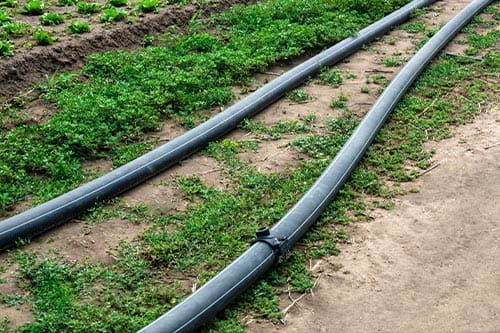
Diameter should be based on calculated flow, not guesswork. An undersized line can surcharge during peak events, while an unnecessarily large pipe can increase material, excavation, fittings, and transportation costs.
Calculate the Design Flow
For stormwater, engineers commonly evaluate catchment area, rainfall intensity, surface runoff characteristics, and required safety factors. For wastewater, they consider fixture discharge, population, industrial flow, peak factors, and possible infiltration.
The EPA’s Storm Water Management Model can route runoff through networks of pipes, channels, storage units, and hydraulic structures. It is a useful reference for qualified designers working on more complex drainage networks.
Check Internal Diameter
Do not compare products using nominal size alone. Depending on the product standard and wall structure, two pipes with the same nominal designation may have different usable internal diameters and flow capacities.
Inner Diameter Versus Outer Diameter
Some product ranges are classified by internal diameter, while others use external diameter. Always state the required measurement basis in the inquiry and confirm the actual minimum internal flow area.
Include the Pipe Gradient
A steeper gradient generally increases gravity-flow velocity, but excessive velocity may create abrasion or downstream problems. A gradient that is too shallow may allow sediment to accumulate.
The final slope should meet local requirements for flow velocity, self-cleansing performance, cover depth, and connection levels.
What Is Drainpipe Ring Stiffness?
Ring stiffness describes the resistance of a thermoplastic pipe to circumferential deformation under a specified test condition. It is particularly relevant to flexible buried pipes subjected to soil, groundwater, construction, and traffic loads.
Common classifications may include SN4, SN8, SN10, or SN12.5, depending on the applicable standard and product range. A higher class should not be selected automatically; installation depth, trench width, native soil, backfill quality, groundwater, and live load must be evaluated together.
Pipe and Soil Work as a System
A flexible buried drainpipe transfers part of the external load to the surrounding compacted soil. Correct bedding and sidefill therefore make an important contribution to structural performance.
Why Installation Quality Matters
Even a high-quality pipe may deform if installed on uneven bedding or surrounded by poorly compacted material. Procurement documents should specify both the product and the approved installation method.
Comparing Anhui Bihe Drainpipe Products
Anhui Bihe supplies several products for underground drainage and infrastructure applications. Buyers can compare these options according to diameter, structural design, connection method, installation conditions, and project load.
HDPE Double Wall Corrugated Pipe
The HDPE double wall corrugated pipe combines a corrugated outer wall with a smooth inner surface. The outer profile supports ring stiffness, while the inner wall promotes efficient flow.
The listed product range includes internal diameters from ID200 to ID1200 and ring stiffness classes from SN4 to SN12.5. Buyers should confirm final dimensions, test standards, quantities, and application conditions directly with the supplier.
PE Hollow Wall Spiral Pipe
The PE hollow wall spiral pipe is designed for large underground drainage applications. Its spiral structural wall provides a balance between external-load resistance and manageable product weight.
The listed sizes extend to large diameters, making this product relevant to municipal drainage, sewage, agricultural water management, and selected industrial projects.
Solid Wall HDPE Pipe
Solid-wall HDPE is worth considering when fusion-welded joints, pressure capability, or a homogeneous wall structure is required. It may suit drainage networks that experience settlement, difficult ground conditions, or intermittent pressure.
Buyers should compare the required pressure rating, SDR, resin grade, jointing equipment, and installation cost. The most economical product price does not always produce the lowest installed system cost.
Drainpipe Connections: Which Type Is Better?
A drainage system is only as reliable as its joints. Connection selection affects leakage resistance, installation time, alignment, repairability, and labor requirements.
Rubber-Ring Socket Joint
A rubber-ring joint allows fast assembly and can accommodate limited movement when correctly installed. The pipe end, socket, and gasket must be clean, aligned, and lubricated with an approved product.
Electrofusion Joint
Electrofusion uses a fitting with an integrated heating element to join compatible polyethylene components. It can provide a strong sealed connection, but requires trained operators, clean surfaces, controlled preparation, and suitable equipment.
Butt-Fusion Joint
Butt fusion creates a continuous polyethylene pipeline by heating and joining prepared pipe ends. It can reduce leakage paths, although the process requires correct machines, procedures, alignment, and inspection.
Heat-Shrink Connection
Heat-shrink sleeves or tapes may be used with certain large-diameter structural-wall pipe systems. The manufacturer’s installation procedure must be followed to achieve consistent sealing and mechanical performance.
Drainpipe Standards and Quality Documents
Standards vary by market, material, and application. Buyers should identify the standards required in the installation country before confirming production.
The ISO catalogue for external sewage systems provides a useful starting point for reviewing international standards related to drainage and sewerage. Local EN, ASTM, AASHTO, GB, or national standards may also apply.
Product Data Sheet
A technical data sheet should state dimensions, tolerances, material, ring stiffness or pressure class, connection method, and intended application. It should be consistent with the quotation and purchase contract.
Test Report
Test reports may cover ring stiffness, ring flexibility, impact resistance, dimensional stability, joint tightness, or material properties. Ask whether the report applies to the proposed product, size, class, and production batch.
Raw Material Information
Raw material affects toughness, welding behavior, long-term performance, and processing consistency. Buyers should ask the supplier to declare the resin type and the use of recycled or reprocessed material where relevant.
Product Marking
Clear marking improves identification during delivery and installation. It may include manufacturer, size, material, stiffness or pressure class, standard, production date, and batch number.
Drainpipe Cost: What Should Buyers Compare?
The lowest price per meter may not deliver the lowest project cost. A complete comparison includes logistics, excavation, machinery, joints, labor, testing, maintenance, and expected service life.
Material Cost
Material cost is influenced by resin prices, diameter, wall design, stiffness class, pressure rating, order quantity, and customization. Very low quotations should be checked for dimensional differences or reduced performance classifications.
Freight and Handling
Large pipes can occupy considerable container or truck volume. Lightweight or nestable products may reduce transportation and lifting requirements, although nesting must not damage the pipe wall.
Installation Cost
Installation cost includes trench preparation, bedding, joining, equipment, labor, dewatering, backfill, compaction, and inspection. Faster installation can offset a higher initial product price.
Maintenance and Failure Risk
A difficult-to-access underground line can be expensive to repair. Joint integrity, blockage control, access chambers, corrosion resistance, and resistance to settlement should be included in a life-cycle comparison.
2026 Drainpipe Procurement Checklist
Before approving an order, confirm the following information:
- Intended use: stormwater, sewage, groundwater, industrial discharge, or irrigation
- Gravity or pressure operating condition
- Required internal flow diameter
- Pipe material and structural design
- Applicable national or project standard
- Ring stiffness, SDR, or pressure rating
- Installation depth and external load
- Soil type, groundwater level, and backfill requirements
- Operating and installation temperature
- Chemical and abrasion exposure
- Joint type and fitting compatibility
- Standard pipe length and quantity
- Dimensional and performance test reports
- Product marking and packaging
- Delivery schedule and shipping method
- Installation instructions and technical support
- Warranty conditions and after-sales service
For a project-specific recommendation or commercial quotation, buyers can contact Anhui Bihe with drawings, quantities, required standards, and site conditions.
Common Drainpipe Buying Mistakes
Selecting Only by Diameter
Diameter does not describe strength, wall structure, material quality, or connection performance. Two products of the same nominal size may have very different capabilities.
Ignoring Site Loads
Burial depth, vehicle traffic, groundwater, and soil conditions can change the structural requirement. The supplier needs accurate site information to recommend a suitable stiffness class.
Comparing Only Price per Meter
A cheaper pipe may require more equipment, labor, fittings, or maintenance. Compare delivered and installed costs over the intended service period.
Mixing Incompatible Components
Pipes, fittings, gaskets, and welding systems are not automatically interchangeable. Dimensional compatibility and joint performance must be confirmed before shipment.
Ordering Before Approving Samples
A sample or trial joint can expose dimensional, handling, and connection issues before mass production. For large projects, pre-shipment inspection and batch documentation can further reduce procurement risk.
Final Drainpipe Buying Advice
A successful purchase begins with a clear project definition. Determine what the line will carry, how much flow it must handle, where it will be installed, and which external loads and environmental conditions it will face.
Next, compare materials, dimensions, stiffness classifications, joints, standards, and total installed cost. When choosing a drainpipe for municipal or infrastructure construction, products such as double-wall corrugated HDPE and hollow-wall spiral PE can provide useful combinations of flow efficiency, structural performance, and installation convenience.
Finally, involve the manufacturer before finalizing the specification. Anhui Bihe’s drainage pipe product range gives buyers a practical starting point for comparing drainage solutions, while detailed project data allows the supplier to recommend a more accurate product configuration.
Frequently Asked Questions About Drainpipe Selection
What is the best drainpipe for underground drainage in 2026?
HDPE structural-wall pipe is a strong option for many underground gravity systems because it is lightweight, corrosion-resistant, and available in multiple stiffness classes. However, the best choice depends on load, soil, diameter, local standards, temperature, and connection requirements.
Is HDPE or PVC better for a drainpipe?
HDPE generally offers greater flexibility and impact resistance, while PVC-U offers high stiffness, smooth flow, and familiar fitting systems. HDPE is common in municipal and large underground projects, whereas PVC-U is widely used in building and smaller drainage applications.
What size drainpipe do I need for heavy rain?
The required size depends on catchment area, local design rainfall, runoff coefficient, gradient, pipe roughness, and permitted surcharge. Ask a qualified drainage engineer to calculate the peak flow instead of choosing a diameter from roof area alone.
Is a bigger drainpipe always better?
No. An oversized system costs more and may provide insufficient self-cleansing velocity during normal flow. Correct hydraulic sizing should balance capacity, velocity, slope, maintenance, and cost.
Which drainpipe is suitable under a road?
A pipe installed under a road must be designed for soil and traffic loading. Required ring stiffness or structural class depends on burial depth, trench conditions, backfill, compaction, groundwater, and expected vehicle loads.
What does SN8 mean on a drainpipe?
SN8 is a nominal ring stiffness classification used for certain thermoplastic piping products. It does not by itself guarantee suitability for every installation; engineers must assess the complete pipe-soil system.
Can stormwater and sewage use the same drainpipe?
They can sometimes use the same pipe material, but the system design and regulations may differ. Stormwater and sanitary drainage are often separated to prevent treatment facilities from being overloaded and to control environmental pollution.
How long can an HDPE drainpipe last?
Service life depends on resin quality, design stress, installation, temperature, chemical exposure, loading, UV exposure, and operating conditions. Buyers should request the manufacturer’s design basis and warranty rather than relying on a general lifespan claim.
What information should I send to a drainpipe manufacturer?
Send the application, standard, material, diameter, stiffness or pressure rating, length, quantity, connection type, installation depth, soil conditions, destination port, and required delivery date. Drawings and tender specifications can help the manufacturer prepare a more accurate proposal.
How can I check drainpipe quality before shipment?
Review product markings, dimensions, appearance, weight, batch records, and relevant laboratory reports. Large orders may also justify sample testing or a third-party pre-shipment inspection.