Table of Contents
Corrugated drain pipe is widely used in underground drainage systems because it combines structural strength, corrosion resistance, relatively low weight, and efficient hydraulic performance. From municipal stormwater networks to industrial sites and building infrastructure, the right corrugated drainage pipe can reduce installation complexity while supporting reliable long-term drainage.
However, specifying a drainage pipe involves much more than selecting a diameter.
Project engineers, contractors, distributors, and procurement teams also need to consider pipe material, wall structure, ring stiffness, burial depth, soil conditions, traffic loads, joint design, installation methods, and applicable standards.
This guide explains the key factors that matter when choosing a corrugated drain pipe for an engineering project and shows how to compare different drainage pipe solutions before purchasing.
What Is a Corrugated Drain Pipe?
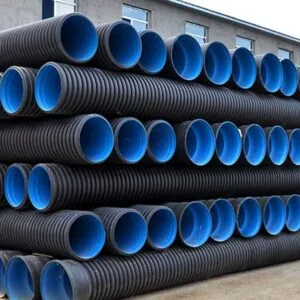
A corrugated drain pipe is a pipe designed with a profiled or ribbed exterior instead of a completely smooth outside wall.
The corrugated structure increases structural rigidity without requiring the entire pipe wall to be excessively thick. This allows manufacturers to produce drainage pipes that provide a useful balance between:
- structural strength;
- weight;
- material efficiency;
- corrosion resistance;
- transportation convenience;
- installation efficiency.
Many modern corrugated drainage systems use polyethylene, particularly HDPE, because polyethylene performs well in underground environments and is resistant to many forms of corrosion encountered by traditional metallic systems.
For projects requiring polyethylene drainage solutions, you can explore Bihe’s complete Drainage Pipe Series for different underground and infrastructure applications.
How Does Corrugated Drain Pipe Work?
Most buried corrugated drainage pipes operate as gravity-flow systems.
Instead of carrying pressurized water, the pipe transports stormwater, wastewater, surface runoff, or other non-pressure flows through a carefully designed pipeline slope.
A typical double-wall corrugated pipe includes:
Corrugated Outer Wall
The profiled exterior provides structural rigidity.
The ribs help distribute loads from surrounding soil, backfill, traffic, and other external forces.
Smooth Inner Wall
Many double-wall drainage pipes use a relatively smooth internal surface to support efficient flow.
This combination provides an important engineering advantage:
structural support on the outside and efficient hydraulic performance on the inside.
The exact pipe structure varies by product type, so engineers should always check project requirements rather than assuming all corrugated pipes have identical performance.
Why Is HDPE Commonly Used for Corrugated Drain Pipe?
High-density polyethylene is widely used in drainage infrastructure because of its combination of physical and chemical properties.
Important characteristics can include:
Corrosion Resistance
HDPE does not rust in the same way as conventional steel materials.
This can be valuable for drainage systems installed in wet soil or environments where corrosion is a long-term concern.
Low Weight
Compared with many traditional rigid pipe materials, plastic drainage pipes can be easier to transport, handle, and position on site.
Lower handling weight may also simplify construction logistics on large projects.
Structural Flexibility
Buried thermoplastic pipe systems interact with the surrounding soil.
Proper bedding and backfill therefore become part of the structural system rather than merely materials placed around the pipe.
Chemical Resistance
Polyethylene has good resistance to many chemicals encountered in drainage and wastewater environments.
Actual suitability should still be verified according to the transported fluid, concentration, temperature, and project standard.
Long-Term Underground Use
When correct materials, structural design, joints, installation procedures, and operating conditions are used, HDPE drainage systems are suitable for long-term buried applications.
ASTM International publishes specifications covering annular corrugated polyethylene pipes for gravity drainage applications. For example, ASTM F2648/F2648M addresses corrugated profile-wall PE pipes and fittings intended for land drainage applications.
Common Types of Corrugated Drain Pipe
Not every project requires the same drainage pipe structure.
Understanding the main categories helps buyers avoid selecting a product simply because the diameter appears correct.
HDPE Double Wall Corrugated Pipe
Double-wall corrugated pipe generally combines:
- a corrugated exterior;
- a smoother internal flow surface;
- relatively high structural efficiency;
- lightweight handling;
- corrosion-resistant material.
Bihe’s HDPE Double Wall Corrugated Pipe is intended for drainage and infrastructure applications where stable underground performance is important.
Typical projects may include:
- municipal drainage;
- stormwater drainage;
- road drainage;
- industrial drainage;
- residential infrastructure;
- commercial developments.
PE Spiral-Wound Pipe
Larger drainage and sewer projects may use spiral-structured polyethylene pipe.
These systems can be designed for larger diameters and demanding underground applications.
Bihe’s drainage product range also includes PE Hollow Wall Spiral Pipe and other PE structured-wall pipe solutions.
PE Steel Strip Reinforced Spiral Pipe
Some large-diameter underground systems require additional structural reinforcement.
Steel-strip reinforced polyethylene spiral pipes combine a polyethylene structure with reinforcement designed to increase ring stiffness.
This can make them suitable for demanding municipal sewer and drainage projects when correctly specified.
Bihe provides PE Steel Strip Spiral Pipe as part of its engineering drainage portfolio.
Corrugated Drain Pipe vs Smooth Wall Pipe
One of the most common procurement questions is whether corrugated pipe or smooth solid-wall pipe should be used.
Neither option is automatically better for every project.
| Factor | Corrugated Drain Pipe | Smooth Wall Pipe |
|---|---|---|
| External structure | Profiled/corrugated | Smooth |
| Structural efficiency | High relative to material use | Depends strongly on wall thickness |
| Weight | Often relatively light | Varies by diameter and SDR |
| Typical use | Gravity drainage | Pressure or non-pressure systems |
| Internal surface | Often smooth in double-wall designs | Smooth |
| Large diameter options | Common | Available depending on system |
| Underground application | Very common | Also widely used |
| Selection priority | Ring stiffness and installation | Pressure class/SDR or stiffness |
For drainage applications, the correct comparison should therefore be based on design conditions, not appearance.
Bihe also supplies Solid Wall HDPE Pipe for projects where a solid-wall PE solution is more appropriate.
What Is Ring Stiffness?
Ring stiffness is one of the most important specifications for buried drainage pipe.
It describes the pipe’s resistance to deformation under external loading.
For structured-wall drainage pipes, buyers may encounter classifications such as:
- SN4;
- SN8;
- SN10;
- SN12.5;
- SN16.
A higher number generally indicates greater ring stiffness, but this does not mean that every project should automatically purchase the highest stiffness available.
The correct class depends on factors such as:
- burial depth;
- soil type;
- backfill quality;
- compaction;
- groundwater conditions;
- traffic loading;
- pipe diameter;
- trench width;
- installation method;
- local engineering requirements.
A correctly installed lower-stiffness pipe may perform better than a higher-stiffness pipe installed with poor bedding and backfill.
This is why ring stiffness should always be considered as part of the complete buried-pipe system.
SN8 vs SN16: Which Corrugated Drain Pipe Do You Need?
For many buyers, the practical question becomes whether to specify SN8, SN16, or another class.
There is no universal answer.
SN8 May Be Suitable When
- burial conditions are moderate;
- backfill can be properly controlled;
- traffic loading is within the design range;
- engineering calculations support the selection.
Higher Ring Stiffness May Be Required When
- burial depths are greater;
- traffic loads are heavier;
- construction conditions are demanding;
- surrounding soil conditions are unfavorable;
- the project specification explicitly requires it.
The final selection should be based on engineering calculations and local codes.
For large municipal projects, Bihe can help evaluate product options through its municipal engineering pipeline solutions.
How to Choose Corrugated Drain Pipe Size
Pipe diameter should never be selected solely by replacing an existing pipe with one that “looks similar.”
A proper drainage design considers expected flow.
Important inputs include:
Design Flow Rate
The system must have enough hydraulic capacity for the expected volume of water.
Stormwater systems may need to account for peak rainfall rather than average flow.
Pipe Slope
Gravity drainage performance depends heavily on slope.
A pipe that is too flat may produce poor velocity and sediment accumulation.
A pipe installed at an unnecessarily steep gradient can also create design complications.
Internal Diameter
Always confirm whether a supplier is quoting:
- nominal diameter;
- internal diameter;
- external diameter.
Confusing these specifications can lead to significant errors when comparing suppliers.
Hydraulic Roughness
The internal surface influences flow characteristics.
Double-wall corrugated systems are often designed with relatively smooth interiors specifically to improve hydraulic performance.
Future Capacity
Municipal and commercial projects should consider future development where appropriate.
A system designed exactly for current flow may become insufficient if the serviced area expands.
Typical Corrugated Drain Pipe Applications
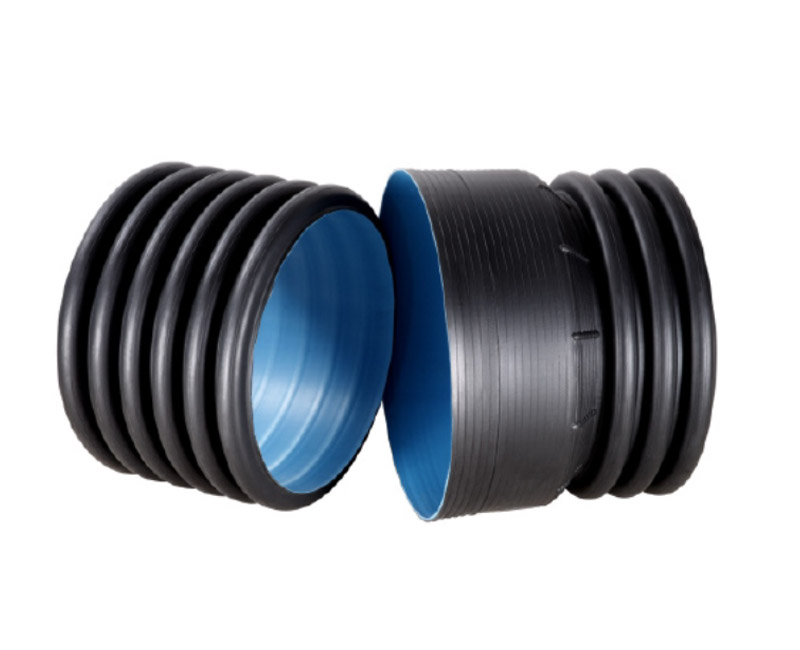
Corrugated drainage pipes are used across a wide range of infrastructure projects.
Municipal Stormwater Systems
Urban roads and development areas generate large amounts of surface runoff.
Corrugated HDPE pipes can be used to transport stormwater from:
- road inlets;
- catch basins;
- parking areas;
- residential developments;
- commercial areas.
Bihe provides drainage solutions for municipal engineering pipelines, including water, drainage, and other infrastructure requirements.
Road and Highway Drainage
Road drainage helps protect pavement structures by moving water away from subgrade and surrounding soil.
Applications can include:
- culvert connections;
- roadside drainage;
- cross drainage;
- stormwater collection.
Industrial Sites
Factories, logistics facilities, industrial parks, and processing plants may require extensive underground drainage networks.
Pipe selection should consider both hydraulic demand and the chemical characteristics of the transported liquid.
Commercial Construction
Shopping centers, warehouses, office developments, and large commercial complexes often require drainage systems for:
- roof runoff;
- parking areas;
- landscape drainage;
- underground infrastructure.
Residential Developments
Housing communities may use corrugated drainage pipes for external stormwater and underground drainage networks.
Agricultural Drainage
Agricultural applications may require water management around fields, irrigation facilities, access roads, or farm infrastructure.
What Burial Depth Is Suitable for Corrugated Drain Pipe?
There is no single safe burial depth for every corrugated pipe.
Suitable burial depth depends on the interaction between the pipe and surrounding soil.
Important variables include:
- pipe diameter;
- ring stiffness;
- soil type;
- trench geometry;
- bedding material;
- backfill;
- compaction;
- surface loading;
- groundwater;
- installation quality.
This means statements such as “SN8 pipe can always be buried X meters deep” should be treated cautiously unless all relevant project conditions are specified.
For significant infrastructure projects, engineers should verify the design according to applicable standards, geotechnical conditions, and manufacturer’s technical data.
Bedding and Backfill Matter as Much as the Pipe
One of the biggest mistakes in underground drainage projects is focusing entirely on the pipe specification while ignoring installation.
Flexible buried pipes depend on interaction with compacted surrounding soil.
Poor installation can cause:
- excessive deformation;
- joint movement;
- settlement;
- uneven loading;
- loss of pipe alignment;
- reduced hydraulic performance.
Good Bedding Should
- provide uniform support;
- avoid large sharp stones;
- maintain design grade;
- prevent concentrated loads.
Sidefill Should
Be placed and compacted carefully around both sides of the pipe.
This helps develop the soil support necessary for the buried system.
Backfill Should
Meet the requirements of the project specification and should not damage or displace the installed pipe.
The Plastics Pipe Institute provides extensive technical resources on polyethylene piping and buried plastic pipe systems through its technical resources.
Joint Performance Is Critical
A drainage pipeline is only as reliable as its connections.
Depending on the pipe type, connections may use:
- bell-and-spigot joints;
- rubber sealing rings;
- couplers;
- heat fusion;
- electrofusion;
- specialized spiral-pipe connections.
The appropriate connection depends on the product structure and project requirements.
For wastewater or groundwater-sensitive projects, joint leakage performance can be particularly important.
Before procurement, ask the supplier:
- What joint type is supplied?
- Is the sealing component included?
- What installation tools are required?
- What tolerances must be maintained?
- Is joint testing required?
- What standard governs joint performance?
10 Questions to Ask Before Buying Corrugated Drain Pipe
Procurement teams can use the following checklist before requesting quotations.
1. What Is the Actual Application?
Stormwater, sewer, industrial drainage, agricultural drainage, and road drainage may have different requirements.
2. What Diameter Is Required?
Confirm whether the specification refers to nominal, internal, or outside diameter.
3. What Ring Stiffness Is Required?
Do not substitute SN classes without engineering approval.
4. What Is the Burial Depth?
Provide both minimum and maximum cover where possible.
5. Is There Vehicle Loading?
Roads, container yards, airports, and industrial facilities may impose significantly different loads.
6. What Are the Soil Conditions?
Loose soil, rock, clay, groundwater, and poor compaction conditions can influence the design.
7. Which Standard Applies?
Project specifications may reference national, regional, or international standards.
ASTM F2648/F2648M, for example, provides requirements for certain annular corrugated profile-wall PE drainage pipes.
8. What Joint System Is Required?
The joint should match leakage, installation, and operating requirements.
9. What Pipe Length Is Best for Transportation?
Longer pipe sections can reduce joints but may complicate shipping and handling.
10. Does the Supplier Offer Engineering Support?
Large infrastructure procurement often requires more than a product quotation.
Technical confirmation before production can reduce specification errors and costly project changes.
Common Corrugated Drain Pipe Selection Mistakes
Choosing Only by Price per Meter
The lowest unit price does not necessarily provide the lowest installed project cost.
Consider:
- fittings;
- installation;
- labor;
- transport;
- equipment;
- expected maintenance;
- service life.
Ignoring Ring Stiffness
Two pipes with the same diameter may have significantly different structural performance.
Comparing Only Outside Diameter
Different structural designs can result in different internal hydraulic dimensions.
Ignoring Installation Conditions
Pipe strength alone cannot compensate for severely inadequate bedding or backfill.
Using the Same Pipe for Every Drainage Project
Municipal sewage, road drainage, industrial wastewater, and residential stormwater systems do not necessarily require identical pipes.
Buying Without Confirming Standards
A product that works physically may still fail project acceptance if it does not match the specification or required testing standard.
How to Compare Corrugated Drain Pipe Suppliers
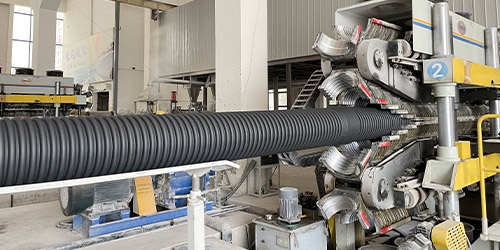
For B2B buyers, choosing a manufacturer should involve more than comparing quotations.
Evaluate the supplier in five areas.
Product Range
A manufacturer with multiple drainage pipe structures can help match the system to the project instead of forcing every project into one product.
Bihe’s Drainage Pipe Series currently includes HDPE double-wall corrugated pipe, solid-wall HDPE pipe, PE hollow-wall spiral pipe, PE Krah pipe, PE steel-strip spiral pipe, and related engineering products.
Manufacturing Stability
Consistent dimensions, wall structure, material quality, and product testing are important in large-volume orders.
Technical Communication
Suppliers should be able to clearly discuss:
- diameter;
- stiffness;
- wall structure;
- joint type;
- application;
- standards;
- packaging;
- delivery.
Project Customization
Large infrastructure projects may require specifications that differ from standard stock products.
Delivery Capability
Production capacity and shipment planning become critical when supplying large pipeline projects.
Corrugated Drain Pipe Selection Matrix
| Project Condition | Main Factor to Check |
| Municipal stormwater | Hydraulic capacity + stiffness |
| Road drainage | Traffic load + burial condition |
| Deep burial | Structural design + soil support |
| Industrial drainage | Chemical compatibility |
| Large diameter sewer | Ring stiffness + joint system |
| Agricultural drainage | Cost efficiency + flow capacity |
| High groundwater | Joint integrity + installation |
| Heavy construction traffic | Temporary and permanent loading |
This matrix should be used as an initial screening tool rather than a substitute for project engineering.
Is Corrugated Drain Pipe Suitable for Municipal Projects?
Yes, corrugated polyethylene drainage pipes can be suitable for many municipal applications when the pipe structure, size, ring stiffness, joint design, and installation method meet project requirements.
Municipal projects may include:
- stormwater collection;
- sewer networks;
- road drainage;
- infrastructure developments;
- industrial parks;
- utility corridors.
However, municipal specifications often impose stricter requirements than small private drainage installations.
Before ordering, buyers should provide technical documentation such as:
- drawings;
- bill of quantities;
- pipe schedule;
- required standards;
- stiffness class;
- diameter;
- installation conditions.
This allows the manufacturer to recommend a more appropriate product configuration.
Why Work With Bihe for Drainage Pipe Projects?
Anhui Bihe Technology Industry Co., Ltd. provides piping solutions for municipal, construction, industrial, residential, and infrastructure applications.
Rather than treating every drainage project as a simple pipe order, Bihe’s product portfolio allows customers to evaluate several drainage structures according to project conditions.
Available solutions include:
- HDPE double-wall corrugated pipe;
- solid-wall HDPE pipe;
- PE hollow-wall spiral pipe;
- PE Krah pipe;
- PE steel-strip reinforced spiral pipe;
- other engineering pipeline products.
For complex projects, customers can combine product selection with Bihe’s municipal engineering pipeline solutions to evaluate drainage requirements within the broader infrastructure system.
If you already have pipe diameter, ring stiffness, project drawings, quantity, or application information, you can contact Bihe for a project quotation and technical product recommendation.
Frequently Asked Questions
What is corrugated drain pipe used for?
Corrugated drain pipe is commonly used in underground stormwater, municipal drainage, road drainage, industrial drainage, agricultural drainage, and other gravity-flow systems.
Is corrugated HDPE pipe suitable for underground installation?
Yes. HDPE corrugated pipe is widely used underground, but performance depends on correct pipe selection, bedding, sidefill, backfill, compaction, burial depth, and loading conditions.
Is corrugated pipe stronger than smooth pipe?
Not in every sense.
Corrugated structures are designed to provide structural efficiency against external loads, while smooth solid-wall pipes may be designed around different pressure or structural requirements. The better choice depends on the application.
What does SN8 mean on drainage pipe?
SN8 identifies a nominal ring stiffness class. Ring stiffness describes resistance to circumferential deformation under external loading. It should be selected according to the complete buried-pipe design.
Is SN16 always better than SN8?
No.
SN16 provides higher nominal ring stiffness, but purchasing a higher class than necessary may increase project cost without providing a meaningful engineering benefit. Selection should follow project calculations and specifications.
Can corrugated pipe be used for sewage?
Certain corrugated or structured-wall PE pipe systems can be used for gravity sewer applications when their material, joints, dimensions, stiffness, and applicable standards meet the project’s requirements.
What is the difference between single-wall and double-wall corrugated pipe?
Single-wall pipe normally has a corrugated profile on both the external and internal surfaces, while double-wall pipe commonly combines a corrugated exterior with a smoother inner wall. The smoother inside surface can provide better hydraulic performance.
How do I choose the correct drainage pipe diameter?
Diameter should be determined from expected flow, slope, hydraulic requirements, system layout, and applicable design standards rather than by visual estimation.
How long does HDPE corrugated drain pipe last?
Service life depends on resin quality, pipe design, operating environment, loading, chemical exposure, installation quality, and maintenance. Project-specific life expectancy should therefore be assessed using applicable design standards and manufacturer data.
What information should I send a manufacturer for a quote?
For an accurate quotation, provide as much of the following as possible:
- pipe type;
- diameter;
- ring stiffness;
- quantity;
- pipe length;
- project application;
- required standard;
- joint type;
- burial depth;
- delivery destination.
Final Takeaway
Choosing the right corrugated drain pipe requires more than matching diameter and price.
A reliable drainage system depends on the interaction between pipe material, wall structure, ring stiffness, hydraulic capacity, burial depth, soil support, joint performance, and installation quality.
For small drainage systems, product selection may be relatively straightforward. For municipal, road, industrial, or large-diameter projects, technical evaluation should take place before procurement.
The best approach is to provide the manufacturer with real project conditions and select the pipe as part of the overall underground drainage system.
Explore Bihe’s complete drainage pipe solutions or contact our team with your project specifications for product selection and quotation support.