Table of Contents
Introduction
Plastic pipe manufacturing is much more than melting polymer material and forming it into a tube. For water supply, drainage, residential plumbing, municipal infrastructure, and industrial projects, the manufacturing process directly influences dimensional accuracy, pressure performance, connection reliability, surface quality, and long-term service stability.
For distributors, engineering contractors, project owners, and other B2B buyers, understanding how plastic pipes are manufactured can therefore make supplier evaluation much more practical. Two pipes may appear similar from the outside, yet differences in raw-material control, extrusion stability, cooling conditions, wall-thickness consistency, testing procedures, and traceability can result in very different performance once the products enter service.
Modern pipe manufacturing requires control across the entire production chain. It starts with appropriate polymer materials and formulation management, continues through extrusion, shaping, cooling, marking, and cutting, and ends with dimensional and performance inspection. A reliable manufacturer must control each stage rather than depending only on final inspection.
Anhui Bihe focuses on PVC and PP-R piping systems for municipal, building, residential, and related engineering applications. Buyers evaluating complete piping options can review the company’s current plastic pipe product range to understand how different product categories support different pipeline requirements.
Why the Pipe Manufacturing Process Matters
For a professional buyer, manufacturing quality affects much more than appearance. A small deviation during extrusion or cooling can influence wall thickness, outside diameter, roundness, joint compatibility, or pressure behavior. When these deviations are repeated across a large production batch, they may create installation difficulties or inconsistent system performance.
This is particularly important in large projects. A residential plumbing project may use hundreds of pipe sections and fittings, while municipal or commercial infrastructure can involve much larger quantities. Consistency across production batches becomes almost as important as the performance of an individual sample.
A controlled manufacturing process helps achieve four essential objectives: repeatable dimensions, stable material properties, reliable connection performance, and consistent product identification. These factors allow contractors to install systems more efficiently and help distributors maintain predictable product quality across different shipments.
International standardization also reflects how broad pipe quality control actually is. ASTM Committee F17 develops specifications, test methods, joining and installation practices, terminology, and related requirements for plastic piping systems. This illustrates why professional pipe manufacturing must combine material, dimensional, mechanical, joining, and application considerations rather than treating production as a single extrusion step. Buyers who need technical background can consult the ASTM Committee F17 resources for plastic piping systems.
Step 1: Raw Material Selection and Incoming Control
Every plastic pipe begins with its raw material, and this stage has a major influence on downstream quality.
Different products require different polymer systems. PVC pipes rely on polyvinyl chloride formulations, PP-R pipes use polypropylene random copolymer materials, while other pipeline categories may use polyethylene or related thermoplastic materials. The material must match the intended product structure and service environment.
Raw-material management normally considers factors such as material grade, consistency, cleanliness, moisture condition where relevant, additives, color masterbatch, and formulation accuracy.
For B2B buyers, raw-material control is important because inconsistent formulations may create differences in processing behavior or finished-pipe properties. Even a well-designed extrusion line cannot fully compensate for unsuitable or poorly controlled feedstock.
A manufacturer should therefore maintain clear procedures for receiving, identifying, storing, and preparing production materials. This reduces the possibility of incorrect material use and supports better production traceability.
Why Material Consistency Matters
Pipe production is a continuous process. The extrusion equipment operates most effectively when material characteristics remain stable. Significant changes in melt behavior can influence extrusion pressure, surface quality, dimensional stability, and production consistency.
This is one reason professional procurement teams should not evaluate pipe quality solely from a finished sample. Understanding how materials are managed provides a better picture of whether the supplier can reproduce that quality during continuous production.
Step 2: Material Mixing and Preparation
Depending on the pipe material and formulation, raw materials may undergo controlled mixing or preparation before entering the extrusion line.
For PVC production, formulation control is particularly important because the final compound can contain resin together with stabilizers, processing aids, pigments, and other functional components. The proportions must be controlled carefully so the compound processes consistently and achieves the required product characteristics.
PP-R and other thermoplastic materials may follow different preparation procedures, but the general principle remains the same: the material supplied to the extruder needs to be homogeneous and suitable for stable processing.
Poor preparation can cause problems such as uneven coloration, inconsistent surface appearance, unstable extrusion, or variations in product performance.
From a quality-management perspective, formulation records and batch identification are therefore valuable. They help manufacturers investigate production abnormalities and maintain repeatability between production runs.
Step 3: Extrusion and Plasticization
Extrusion is the central stage of plastic pipe manufacturing.
Prepared polymer material enters an extruder, where controlled heating and mechanical action convert it into a uniform melt. A rotating screw transports the material through different zones of the barrel while temperature, screw speed, pressure, and output are managed according to the material and pipe specification.
The objective is not simply to melt the polymer. The material needs to reach a sufficiently uniform processing condition before it enters the die.
If processing conditions are unstable, possible consequences include:
- Uneven wall thickness
- Irregular surface appearance
- Dimensional variation
- Internal defects
- Unstable production output
Experienced production teams therefore monitor extrusion parameters continuously rather than setting the line once and leaving it unchanged.
Why Temperature Control Is Critical
Processing temperature has a direct relationship with melt behavior. Excessive or insufficient heat can affect how the material flows through the extrusion system.
Different polymers require different processing windows, which means the correct parameters depend on the specific product being produced. Professional pipe manufacturing therefore relies on established process settings rather than applying one universal temperature profile to every product.
Stable temperature control also helps maintain consistent extrusion pressure and surface quality during long production runs.
Step 4: Die Forming and Pipe Geometry
After plasticization, the molten polymer passes through an extrusion die that forms the basic pipe profile.
The die determines the initial relationship between the outer diameter and internal passage. However, the pipe leaving the die is still hot and dimensionally unstable, so forming does not end at this point.
Die condition and setup are important because uneven flow can contribute to wall-thickness variation around the circumference of the pipe. For pressurized piping products, consistency is especially significant because wall thickness is closely related to structural performance.
Production personnel must therefore coordinate die setup with extrusion output, sizing conditions, and downstream line speed.
Step 5: Vacuum Sizing and Dimensional Control
Once the hot pipe exits the die, it enters a sizing stage. Depending on the production line and pipe design, vacuum calibration equipment may be used to help establish and maintain the required outside diameter and shape.
This stage controls characteristics such as:
- Outside diameter
- Roundness
- Dimensional stability
- Surface formation
Accurate sizing is essential because pipe dimensions affect fittings, joints, installation compatibility, and overall system performance.
For distributors carrying complete pipe-and-fitting systems, dimensional consistency is particularly important. Pipes that vary beyond acceptable tolerances can create unnecessary installation problems even when the material itself is otherwise suitable.
Step 6: Controlled Cooling
The newly formed pipe remains hot after sizing and must be cooled under controlled conditions.
Cooling usually takes place through water-based cooling systems arranged along the production line. The objective is to reduce temperature gradually while preserving the required pipe geometry.
Cooling conditions may appear simple, but they require careful control. Uneven or excessively rapid cooling can contribute to dimensional instability, deformation, or residual stresses.
Pipe diameter, wall thickness, material type, extrusion speed, and cooling capacity all influence how this stage should be managed.
A professional production line therefore treats cooling as part of dimensional control rather than merely a way to reduce product temperature.
Step 7: Haul-Off and Line-Speed Coordination
After sizing and initial cooling, haul-off equipment pulls the pipe continuously through the production line.
The haul-off speed must remain coordinated with extrusion output. If these two processes are poorly matched, the pipe may experience dimensional changes.
For example, changes in line speed can influence wall thickness or diameter consistency. Maintaining stable synchronized operation is therefore important during continuous production.
This illustrates a broader principle in pipe manufacturing: individual machines cannot be evaluated independently. Extrusion, sizing, cooling, haul-off, and cutting must operate as one integrated system.
Step 8: Printing and Product Identification
Professional plastic pipes normally include printed product information along the pipe surface.
Depending on the product and applicable requirements, markings may identify information such as:
- Manufacturer
- Product type
- Material
- Pipe dimensions
- Production information
- Relevant specification or standard
- Batch or traceability information
Clear marking supports logistics, installation, quality verification, and future traceability.
For international projects, this becomes especially useful because products may pass through manufacturers, exporters, distributors, contractors, and installation teams before final use. Proper identification reduces confusion across the supply chain.
Step 9: Cutting and Finished Length Control
After the pipe has been formed and cooled, it is cut into specified lengths or prepared according to the required packaging format.
The cutting stage needs to produce clean, consistent pipe ends without unnecessary deformation or damage.
Length consistency is also important for logistics and project planning. When buyers purchase large quantities, predictable dimensions simplify inventory management, container loading, storage, and on-site installation.
Depending on product type, additional processing may be required after cutting. This can include socket preparation, end treatment, inspection, or other product-specific operations.
Step 10: Dimensional Inspection
One of the first quality-control stages for finished pipes is dimensional inspection.
Typical characteristics may include:
| Inspection Item | Why It Matters |
|---|---|
| Outside diameter | Affects fitting and joint compatibility |
| Wall thickness | Influences mechanical and pressure performance |
| Roundness | Supports reliable connection and installation |
| Pipe length | Helps project planning and installation |
| Surface condition | Can reveal production abnormalities |
| End condition | Influences handling and connection preparation |
Dimensional inspection is particularly important because apparently small production variations can create problems when pipes must connect precisely with fittings or other pipeline components.
Quality control should therefore be performed during production as well as on finished products. Waiting until the entire production batch is complete makes corrective action less efficient.
Step 11: Performance and Application-Related Testing
Dimensional inspection alone cannot confirm the complete performance of a plastic pipe.
Depending on the product type, application, applicable standard, and project specification, manufacturers may need to evaluate physical or mechanical properties using appropriate test methods.
Testing requirements differ between drainage pipes, water supply pipes, hot and cold water systems, and other applications. A professional manufacturer should therefore establish inspection plans around the specific product rather than use one identical checklist for every pipe.
For pressure-related applications, attention may be given to the relationship between pipe dimensions, material behavior, pressure class, and expected service conditions.
For drainage products, other characteristics can become more important depending on pipe structure and installation environment.
The key procurement lesson is that buyers should ask what is tested, how often tests are performed, which specification governs acceptance, and whether the supplied documentation corresponds to the actual product they intend to purchase.
In-Process Inspection vs Final Inspection
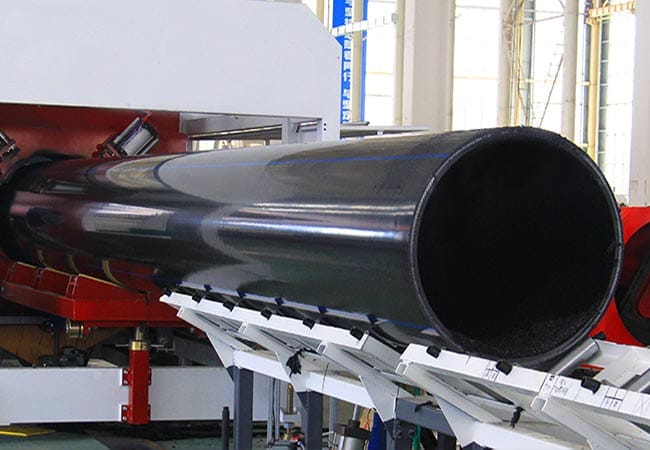
Strong quality control does not depend only on testing finished pipes.
In-process inspection allows production teams to detect deviations while the line is operating. This can include monitoring dimensions, extrusion parameters, surface conditions, marking quality, and other process indicators.
Final inspection then provides another control stage before products are packaged or released.
These two approaches serve different purposes. In-process control reduces the amount of nonconforming production, while final inspection confirms that finished products meet the established acceptance criteria.
For buyers purchasing large production batches, this combined quality system is generally more meaningful than seeing one selected sample tested after production.
Quality Control Points B2B Buyers Should Examine
When evaluating a plastic pipe supplier, procurement teams can use the manufacturing process as a practical audit framework.
Raw Material Traceability
Ask whether the manufacturer can identify the material used for a production batch and maintain corresponding production records.
Dimensional Consistency
Confirm how diameter and wall thickness are monitored during continuous production rather than checking only one finished pipe.
Process Control
Understand whether critical production parameters are documented and monitored during extrusion.
Testing Capability
Review which tests are performed internally and which may require external laboratories.
Batch Identification
Check whether finished products can be connected to a recognizable production batch or date.
Product-to-Application Matching
A capable supplier should understand how the intended application influences product selection. Water supply, hot water, drainage, municipal infrastructure, and industrial use should not automatically be treated as interchangeable conditions.
Why Fittings and Joining Compatibility Matter
The quality of a pipeline depends on the complete system rather than the pipe alone.
A pipe may meet its dimensional requirements but still create installation difficulties if fittings, joining methods, or accessories are poorly matched.
For this reason, engineering buyers should evaluate:
- Pipe and fitting dimensional compatibility
- Recommended joining method
- Installation conditions
- Required tools
- Installer training requirements
- Site environment
This is especially important for PP-R systems where heat fusion forms part of the installation process, and for PVC systems where the connection approach depends on the product design and application.
Manufacturing quality therefore needs to support reliable system assembly after products leave the factory.
How Production Quality Affects Large Engineering Projects
The importance of production consistency becomes more visible as project scale increases.
For a large municipal, commercial, or residential development, inconsistent pipe dimensions can slow installation. Poor batch traceability can make problem investigation difficult. Unstable product characteristics can also complicate inventory management when material from different shipments is installed within the same project.
Consistent manufacturing provides contractors with more predictable products. It can improve installation efficiency, simplify fitting compatibility, and reduce uncertainty during project execution.
Anhui Bihe states that its current business focuses on PVC and PP-R piping systems and that its operating approach combines product development, quality control, stable supply, and engineering adaptability. Buyers who want to understand the company background and manufacturing approach can review Anhui Bihe’s company and production capabilities.
How Buyers Should Evaluate a Pipe Manufacturing Partner
A professional procurement review should go beyond asking whether a manufacturer can produce the required pipe size.
The first consideration is product alignment. A supplier specializing in residential PP-R systems may not necessarily be the most appropriate source for every municipal or industrial pipeline project. Buyers should confirm whether the manufacturer’s actual product portfolio matches the required application.
The second consideration is production stability. Suppliers should demonstrate that they can maintain quality not only during sample production but also throughout regular production batches.
Third, buyers should review quality documentation. Depending on the project, this may include material information, dimensional records, inspection reports, applicable standards, or third-party documentation.
Fourth, technical communication matters. Before manufacturing begins, both sides should clearly define material, size, pressure or performance requirements, application environment, packaging, marking, and other project-specific requirements.
Finally, supply reliability should be considered together with technical quality. For B2B projects, consistent production planning and communication can be as important as individual product characteristics because delays or inconsistent batches can affect the entire construction schedule.
What Information Should Buyers Provide Before Production?
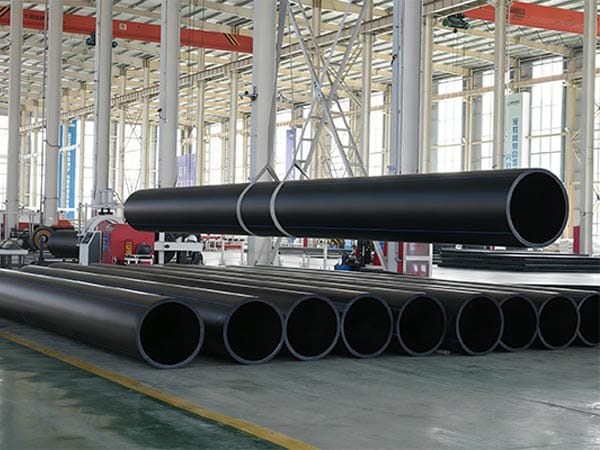
Accurate project information helps manufacturers recommend or configure the right pipe system.
Useful information includes the intended application, transported medium, operating temperature, expected pressure conditions, pipe diameter, installation method, required fittings, project environment, expected quantity, applicable standard, and any special marking or packaging requirements.
For engineering projects, providing these details early helps reduce repeated specification changes later.
Rather than asking only for a generic plastic pipe, buyers should approach procurement as a system specification process. The clearer the operating conditions are, the easier it becomes to identify the correct product configuration.
Manufacturing Quality and Long-Term Pipeline Performance
Pipe performance does not depend on one manufacturing parameter. It results from the interaction between material, process control, product dimensions, joining, installation, and operating conditions.
This is why professional quality management needs to begin before extrusion and continue after the pipe leaves the production line.
A high-quality production process cannot correct an unsuitable material choice for the intended application. Similarly, a well-manufactured pipe may not perform as expected if the wrong specification is selected or installation procedures are not followed.
Manufacturers, distributors, engineers, and installers therefore share responsibility for achieving reliable pipeline performance.
Conclusion
The plastic pipe manufacturing process combines material selection, formulation control, extrusion, forming, sizing, cooling, haul-off, marking, cutting, dimensional inspection, and performance verification. Every stage contributes to the consistency and reliability of the finished piping system.
For B2B buyers, understanding these stages provides a better framework for evaluating suppliers. Instead of judging products only by appearance or a single sample, procurement teams can examine raw-material control, production stability, dimensional consistency, testing capability, traceability, application knowledge, and batch management.
Effective pipe manufacturing ultimately depends on process control across the entire production chain. When suitable materials, stable manufacturing, appropriate testing, compatible fittings, and correct installation are combined, plastic piping systems can deliver dependable performance across residential, commercial, municipal, and industrial applications.
FAQ
What is the basic plastic pipe manufacturing process?
The process normally includes raw-material preparation, extrusion and plasticization, die forming, sizing, cooling, haul-off, printing, cutting, inspection, and packaging. Additional operations depend on the pipe material, design, and intended application.
Why is extrusion important in pipe manufacturing?
Extrusion converts polymer material into a controlled molten state and continuously forms the basic pipe profile. Stable extrusion conditions are important because temperature, pressure, output, and line speed can affect dimensions, surface quality, and production consistency.
What quality checks are important for plastic pipes?
Important checks may include outside diameter, wall thickness, roundness, surface condition, length, marking, and application-specific performance tests. The exact inspection plan should match the pipe type and applicable requirements.
How can buyers evaluate a plastic pipe manufacturer?
Buyers should examine product specialization, raw-material control, production capability, in-process inspection, final testing, batch traceability, technical support, documentation, and the manufacturer’s ability to understand the intended project conditions.
Does pipe manufacturing quality affect installation?
Yes. Dimensional consistency, pipe roundness, fitting compatibility, end condition, and overall manufacturing stability can all influence installation efficiency. Consistent products make connections and project execution more predictable.
Need Help Matching Pipe Production to Your Project?
Every pipeline project has different requirements for material, dimensions, application environment, connections, and performance. Before selecting a pipe system, it is useful to define these conditions clearly and match them with the manufacturer’s actual production capabilities and product portfolio.
For project-specific product selection, technical requirements, or customized piping solutions, contact the Anhui Bihe team with your application details so the appropriate pipe system can be evaluated.