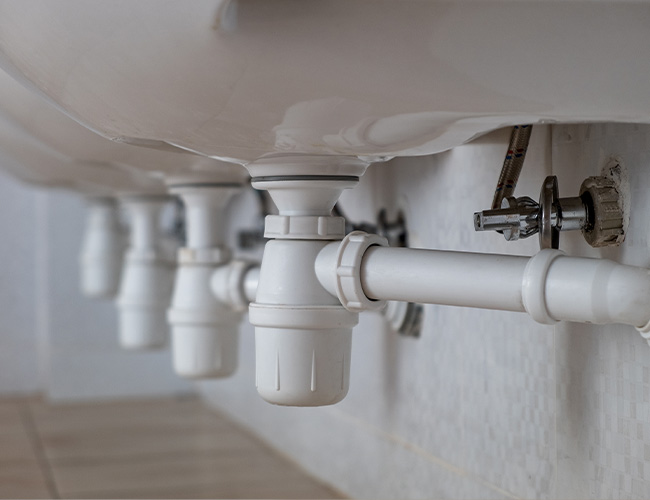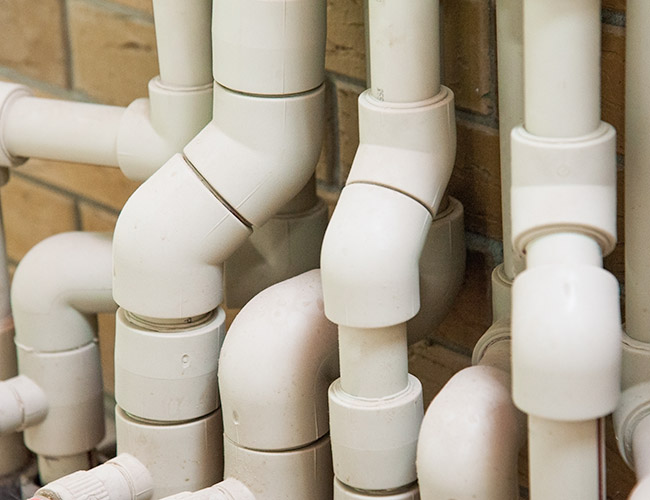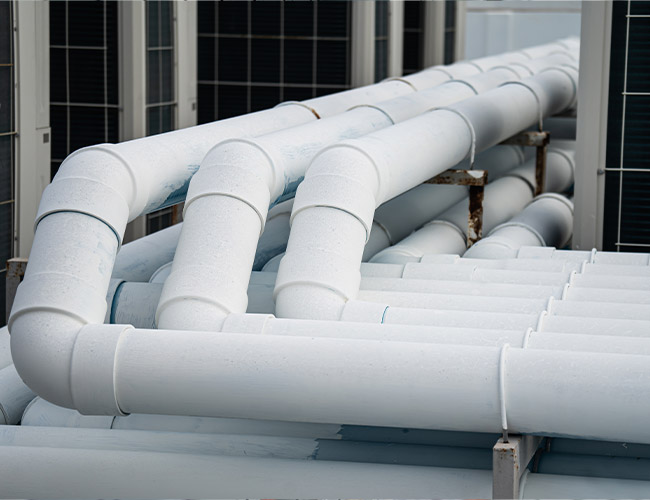
Welcome to our blog. We are a professional manufacturer specializing in high-performance PVC and PP-R piping systems, delivering integrated solutions for municipal engineering, building infrastructure, and residential hot and cold water applications worldwide.
👉 Follow us on Facebook for the latest product updates, technical insights, and real-world project cases.
👉 If you have project requirements or need a quotation, feel free to contact our team for fast response and customized pipeline solutions.
Please continue reading our blog for more industry insights, engineering expertise, and product innovations in advanced piping systems.
Table of Contents
- Match the pipe material and pressure class to the transported medium, operating conditions, soil and installation method.
- Confirm applicable standards, pipe dimensions, fittings and jointing requirements before requesting quotations.
- Evaluate the complete installed cost rather than comparing pipe prices alone.
- Include testing, inspection, documentation and delivery requirements in the purchase contract.
- Coordinate the pipe supplier, designer and installation contractor before materials reach the site.
- Reduce project risks by checking certificates, batch traceability and technical support.
Buying pipes is not simply a matter of choosing a diameter and asking for the lowest price. The success of the laying of pipelines depends on how well the pipe system matches the application, site conditions, joining process and installation plan.
A product that looks economical in a quotation can become expensive if it requires special equipment, creates excessive jointing work or is unsuitable for the local soil. This guide helps procurement teams ask better questions, compare realistic offers and select a pipeline system that can be installed efficiently.
What Does Laying of Pipelines Include?
The laying of pipelines is the complete process of positioning, joining, supporting, testing and protecting pipes along a planned route. Depending on the project, the work may include excavation, trench preparation, pipe handling, jointing, pressure testing, backfilling and final commissioning.
For buyers, installation should be considered during product selection—not after the purchase order has been issued.
Pipeline route planning
Route planning determines the pipeline length, changes in direction, elevation differences and possible conflicts with existing utilities. An accurate route survey helps buyers estimate pipe quantities, fittings and delivery batches more reliably.
Trench and foundation preparation
The trench must provide sufficient space for pipe placement, jointing and inspection. Its base should offer uniform support without sharp stones, large voids or unstable material that could create concentrated loads on the pipe.
Pipe handling and placement
Pipes must be lifted, transported and lowered without damaging their surfaces or ends. Plastic pipes should not be dragged over rough ground, while larger-diameter sections may require lifting slings and coordinated equipment.
Jointing and connection
The joining method affects installation speed, equipment requirements and leak resistance. Heat fusion, socket fusion, rubber-ring joints, flanges and mechanical couplings each require different procedures and quality checks.
Testing and commissioning
The completed pipeline may need pressure, leakage, alignment or flow testing before it enters service. Testing criteria should be defined in the contract and based on the project specification and relevant local standards.
Information Buyers Need Before Requesting a Quote
A reliable quotation for the laying of pipelines begins with a complete project brief. Sending only the pipe diameter and required length may result in inaccurate product recommendations or missing costs.
Service conditions
Tell the supplier what the pipeline will transport and whether the system is for water supply, gas distribution, gravity drainage, pressurized sewerage, cable protection or industrial use. Fluid temperature, chemical exposure and expected service conditions should also be stated.
Pressure requirements
Buyers should provide the normal operating pressure, possible surge pressure and test pressure. The selected pipe class must be evaluated against the complete operating profile rather than the average pressure alone.
Why surge pressure matters
Rapid valve closure, pump starting or sudden flow changes can create pressure surges. These temporary conditions may exceed normal operating pressure and should be considered during pipeline design.
Installation environment
Soil type, groundwater level, burial depth, traffic loading and ambient temperature can influence pipe selection. For above-ground installations, ultraviolet exposure, thermal movement and support spacing also require attention.
Required standards
State the required national, international or project-specific standards in the inquiry. For example, the ISO 4427 series covers polyethylene piping systems for water supply and pressure drainage applications under defined conditions.
Do not request a certificate without naming the standard, edition, product scope and testing requirements. A general “quality certificate” may not provide enough evidence for technical approval.
Choosing Pipes for the Laying of Pipelines
There is no single material that is best for every project. Buyers should compare hydraulic performance, corrosion resistance, jointing method, installation speed and lifecycle requirements.
Anhui Bihe supplies different plastic pipe systems for water supply, drainage, gas transmission, power protection and infrastructure projects.
| Pipe system | Typical application | Main procurement consideration | Common joining method |
|---|---|---|---|
| HDPE pressure pipe | Water and gas transmission | Pressure class, SDR, resin grade and fusion requirements | Butt or electrofusion |
| HDPE corrugated pipe | Gravity drainage and sewer systems | Ring stiffness, burial depth and joint sealing | Rubber-ring connection |
| Steel-reinforced PE spiral pipe | Large-diameter drainage | Structural strength, fitting compatibility and handling | Application-dependent |
| PP-R pipe | Building water supply | Temperature rating, pressure class and fitting system | Socket fusion |
| PVC-U protective pipe | Cable and utility protection | Impact resistance, duct layout and pulling requirements | Socket or coupling |
HDPE pressure pipe
HDPE pipe offers flexibility, corrosion resistance and fusion-jointed connections. It is widely considered for buried water and gas systems, but buyers must correctly specify diameter, SDR, pressure rating and applicable certification.
For gas distribution requirements, review Bihe’s HDPE gas pipe and confirm that the selected product complies with the regulations applied in the destination market.
Structured-wall drainage pipe
Structured-wall pipes combine relatively low weight with the stiffness required for buried, non-pressure applications. The HDPE double-wall corrugated pipe is designed for drainage systems where hydraulic flow, burial conditions and external loading are important.
Ring stiffness
Ring stiffness describes a pipe’s resistance to deformation under external loading. A higher class is not automatically the correct choice; the specification should consider trench width, burial depth, soil conditions and backfill quality.
Steel-reinforced polyethylene pipe
For large-diameter drainage projects, a PE steel-strip spiral pipe can provide structural strength and corrosion resistance. Buyers should verify connection details, available fittings and transportation limits before ordering.
PP-R water supply pipe
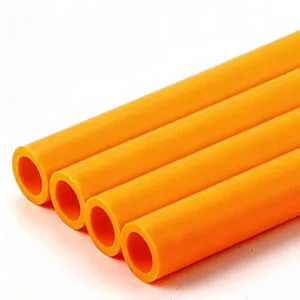
PP-R systems are commonly used for hot and cold water distribution inside buildings. Selection should account for pressure, operating temperature, thermal expansion and compatibility between pipes and fittings.
Open-Trench vs Trenchless Pipeline Installation
The installation method affects the pipe specification, delivery form and project budget. It should therefore be decided before the procurement package is finalized.
Open-trench installation
Open-trench construction exposes the pipeline route through excavation. It gives installers direct access for bedding preparation, jointing and inspection and is often practical where surface disruption is acceptable.
However, excavation, spoil removal, traffic management and surface restoration can represent a significant part of the total cost.
Trenchless installation
Horizontal directional drilling, pipe bursting and related trenchless methods reduce the need for continuous excavation. They may be useful beneath roads, rivers or developed areas where surface access is limited.
Trenchless work can place substantial pulling, bending and abrasion loads on the pipe. Buyers should confirm that the proposed pipe, joints and wall thickness are suitable for the selected construction method.
| Comparison factor | Open trench | Trenchless method |
|---|---|---|
| Surface disruption | Generally higher | Generally lower |
| Access to the pipe | Direct access | Limited during installation |
| Route suitability | Open or accessible areas | Roads, rivers and congested sites |
| Pipe stress during installation | Usually moderate | Pulling and bending loads may be higher |
| Equipment needs | Excavators and compaction equipment | Specialized drilling or bursting equipment |
| Cost driver | Excavation and restoration | Equipment, planning and technical expertise |
Neither method is universally cheaper. Buyers should compare the total cost after considering site access, restoration, installation risks and schedule constraints.
A Buyer’s Checklist for Laying of Pipelines
A structured checklist makes quotations easier to compare and reduces the risk of missing components.
Technical documents to request
- Product datasheet with dimensions and tolerances
- Material grade or compound information
- Pressure, SDR or stiffness classification
- Applicable test reports and certificates
- Jointing instructions
- Handling and storage recommendations
- Batch identification and traceability records
- Compatible fittings and accessories list
Commercial details to confirm
- Price basis and Incoterms
- Minimum order quantity
- Pipe lengths or coil dimensions
- Packaging and container-loading plan
- Production and delivery schedule
- Spare fittings and recommended allowances
- Inspection terms
- Warranty scope and exclusions
Questions to ask the supplier
Can all pipes and fittings come from one compatible system?
System compatibility reduces the risk of dimensional mismatch and unclear responsibility. Buyers should confirm whether pipes, fittings, valves and joining tools have been evaluated for use together.
What equipment is required on site?
Fusion machines, generators, alignment clamps, lifting equipment and testing pumps may need to be arranged separately. Knowing these requirements early helps contractors prepare an accurate installation budget.
Is installation training available?
Training can be valuable when local teams are unfamiliar with a particular jointing system. Ask whether the supplier can provide procedures, videos, remote guidance or on-site technical assistance.
How to Calculate the Real Pipeline Cost
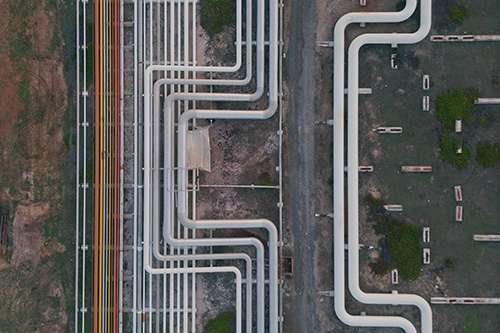
The pipe price is only one part of the laying of pipelines. A useful procurement comparison should include materials, logistics, installation, testing and expected maintenance.
Material cost
Material cost includes pipes, fittings, valves, seals, flanges and spare parts. Buyers should also allow for route changes, field adjustments and a reasonable quantity of replacement components.
Logistics cost
Long rigid pipe sections may require different transport arrangements from coils or shorter lengths. Container utilization, unloading equipment, storage space and site access can significantly affect the delivered cost.
Installation cost
Installation costs can include excavation, bedding, fusion work, equipment rental, labor, testing and backfilling. A pipe system with fewer joints may reduce labor even when its unit price is higher.
Lifecycle cost
Lifecycle evaluation considers maintenance, corrosion protection, leak risk and expected service conditions. It helps buyers avoid choosing a low initial price that creates higher costs during operation.
Quality Control During Pipeline Installation
Inspection should take place throughout construction, not only after the system is buried.
Incoming material inspection
Check product markings, dimensions, quantities and visible condition when materials arrive. Damaged ends, deep scratches or deformed fittings should be isolated for technical assessment.
Joint inspection
Fusion parameters or mechanical assembly procedures should be recorded where the project specification requires them. Joint surfaces must be prepared correctly, and operators should use suitable equipment and approved instructions.
Bedding and backfill control
Uniform support and properly placed backfill help distribute loads around a buried plastic pipe. Large stones, frozen material and poor compaction can undermine the intended performance of the system.
Safety in trenches
Excavation work creates serious hazards. OSHA identifies cave-ins as a major trenching risk and recommends appropriate sloping, shoring or shielding measures. Buyers and project managers can consult the official OSHA trenching and excavation guidance, while local legal requirements must always take priority.
Common Procurement Mistakes to Avoid
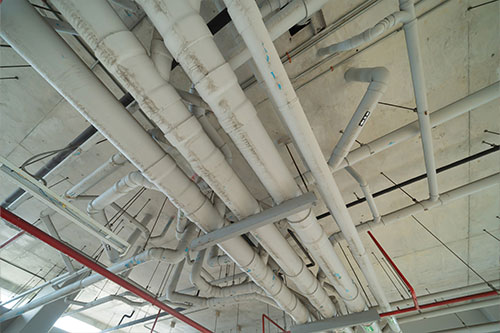
Buying by diameter alone
Two pipes with the same nominal diameter may have different wall thicknesses, pressure ratings, stiffness classes and connection systems. The complete specification must be compared.
Mixing incompatible components
Pipes and fittings from unrelated systems may not provide the intended dimensional or jointing compatibility. Written confirmation should be obtained before mixed components are approved.
Ignoring local standards
A product suitable for one country may require different certification in another market. Buyers should identify regulatory and approval requirements before production begins.
Ordering without an installation plan
The laying of pipelines can be delayed when jointing equipment, adaptors or special fittings are missing. A route drawing and bill of materials should be reviewed before shipment.
Choosing solely on the lowest price
An unusually low offer may exclude fittings, inspection, packaging or technical documentation. Compare quotations line by line and request clarification for every exclusion.
Final Procurement Advice
Successful laying of pipelines starts well before excavation. It begins with a clear design basis, a complete product specification and coordination among the buyer, engineer, supplier and contractor.
Evaluate the whole pipeline system rather than an isolated pipe price. By confirming materials, standards, fittings, installation methods, testing requirements and documentation before ordering, buyers can reduce site delays and make quotations meaningfully comparable.
For water supply, drainage, gas and utility projects, explore Bihe’s plastic pipeline product range and discuss the application conditions with the supplier before finalizing the purchase specification.
FAQ
What should I send a pipe supplier to get an accurate quotation?
Provide the application, transported medium, diameter, total length, operating pressure, temperature, installation method, required standard, destination and project schedule. Route drawings and a fitting list will make the quotation more accurate.
Which pipe is best for underground water supply?
HDPE is frequently used for underground pressure water systems because it offers corrosion resistance and fused joints. The correct material still depends on pressure, temperature, water quality, soil conditions and local standards.
How deep should a pipeline be buried?
There is no universal burial depth. The designer must consider frost depth, surface traffic, soil characteristics, pipe stiffness, groundwater and local regulations.
How do I choose between SDR classes?
A lower SDR indicates a thicker wall relative to the pipe diameter. The required SDR should be determined from design pressure, temperature, surge conditions, safety factors and the applicable standard.
Is trenchless installation always more expensive?
No. Specialized equipment can increase direct installation costs, but reduced road closure, excavation and surface restoration may lower the overall project cost. A site-specific comparison is necessary.
How can buyers reduce leaks after installation?
Select compatible system components, require trained jointing personnel, follow approved procedures and inspect joints before backfilling. Pressure or leakage testing should be completed according to the project specification.
Should I purchase extra fittings?
Yes, a controlled allowance for spare fittings is generally sensible, especially for international projects. The quantity should reflect route complexity, site cutting requirements and the availability of local replacements.
Can drainage pipes be used for pressurized water?
A gravity drainage pipe should not be assumed suitable for pressure service. Buyers must verify the product’s intended application and documented pressure classification before ordering.