Welcome to our blog. We are a professional manufacturer specializing in high-performance PVC and PP-R piping systems, delivering integrated solutions for municipal engineering, building infrastructure, and residential hot and cold water applications worldwide.
👉 Follow us on Facebook for the latest product updates, technical insights, and real-world project cases.
👉 If you have project requirements or need a quotation, feel free to contact our team for fast response and customized pipeline solutions.
Please continue reading our blog for more industry insights, engineering expertise, and product innovations in advanced piping systems.
Table of Contents
Introduction
In modern construction procurement, one of the most confusing questions buyers face is: why do plastic PVC pipes with similar appearance and labeling show price differences of 2–3 times or even more?
In real engineering markets, basic PVC pipes used for indoor wiring are extremely affordable, while underground communication, industrial, or wetland-grade PVC systems can be significantly more expensive. This difference is not branding—it is driven by structural design, material grade, wall thickness, load capacity, and service life requirements.
According to global plastic piping industry reports (2025), the PVC pipe market continues to grow at around 4.2% CAGR, with engineering-grade systems (especially multi-hole and reinforced structures) showing the fastest growth.
This extended guide on plastic PVC pipes price tips breaks down pricing logic, engineering standards, cost structure, real-world case studies, and procurement strategies to help buyers make informed decisions.
Key Takeaways
- Understand real pricing logic behind plastic PVC pipes
- Learn how structure and grade affect cost
- Compare different PVC pipe systems and applications
- Analyze international standards influencing pricing
- Review real engineering project cost breakdowns
- Identify procurement risks and lifecycle cost factors
- Understand industry trends and white paper insights
Plastic PVC Pipes Price Structure & Engineering Logic
Core Pricing Mechanism of Plastic PVC Pipes
Raw Material Cost (PVC Resin Grade)
The main cost driver of plastic PVC pipes is PVC resin quality, which directly affects durability and performance.
- Higher molecular stability
- Improved impact resistance
- Lower thermal deformation rate
Industrial-grade PVC resin can be 15%–40% more expensive than standard materials.
Structural Design Impact on Price
Single-Layer PVC Pipes
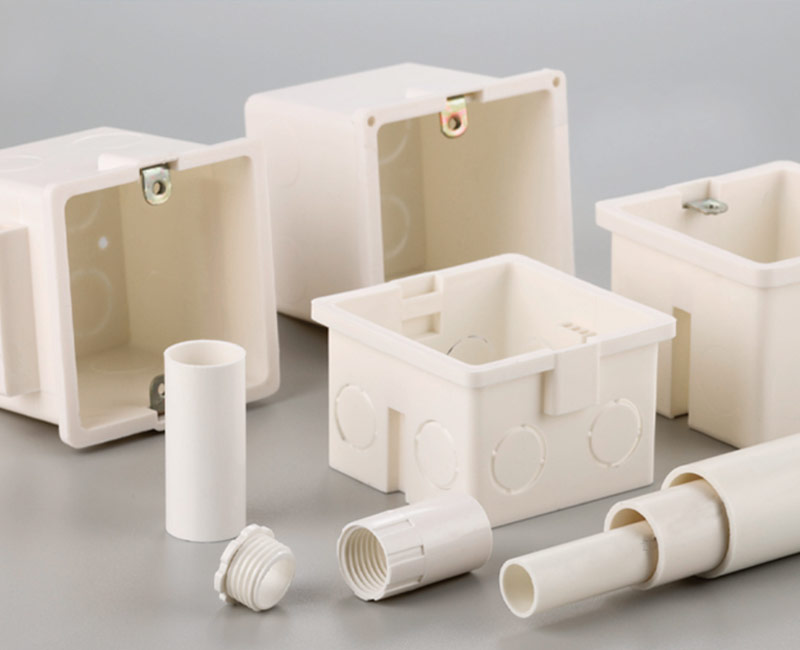
Used for basic wiring protection or low-pressure applications.
- Simple structure
- Lowest cost
- Moderate durability
Multi-Hole PVC Systems (e.g., PVC-U Porous Pipe)
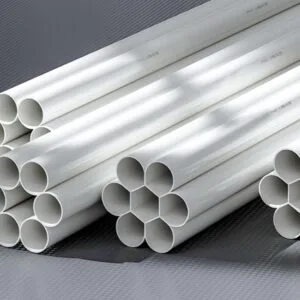
Used in telecom, power, and underground cable networks.
- Complex integrated structure
- Higher manufacturing difficulty
- 20%–60% higher cost
Manufacturing Process Cost Influence
Standard Extrusion Process
- Lower cost
- Moderate precision
High-Precision Co-Extrusion
- Uniform wall thickness
- Higher mechanical strength
- Increased production cost
Plastic PVC Pipes Price Classification System
Engineering Classification Model
Light-Duty PVC Pipes
Used for simple indoor wiring protection.
- Thin wall structure
- Lowest cost category
- Limited load resistance
Medium-Duty PVC Pipes
Used in general construction projects.
- Balanced performance
- Mid-range price
- Widely used in buildings
Heavy-Duty PVC Pipes
Used for underground and high-load environments.
- Thick wall structure
- High compression resistance
- Higher cost but long lifespan
Plastic PVC Pipes Price Comparison Table
| Type | Application | Structure | Cost Level | Lifespan |
|---|---|---|---|---|
| Light-duty PVC pipes | Indoor wiring | Simple | Low | 10–20 years |
| Medium-duty PVC pipes | Building systems | Medium | Medium | 20–30 years |
| Heavy-duty PVC pipes | Underground engineering | Reinforced | High | 30–50 years |
| Multi-hole PVC systems | Telecom & power networks | Integrated | Very high | 50+ years |
Plastic PVC Pipes Standards & Pricing Influence
International Standards Affecting Price
Key Engineering Standards
- JG/T 3050 (building electrical conduit standard)
- ISO 1452 (PVC-U piping systems)
- ASTM D1785 (PVC pipe specifications)
How Standards Impact Pricing
Higher Standards = Higher Cost
- Stricter compression testing
- Improved fire resistance requirements
- Tighter dimensional tolerances
Certified products typically cost 10%–35% more
Plastic PVC Pipes White Paper Insights
Industry Trends (2025 Report Summary)
1. Demand Structure Shift
- Industrial-grade PVC growing fastest
- Stable building sector demand
- Rapid telecom infrastructure expansion
2. Multi-Hole System Growth
Multi-channel PVC systems are growing at over 6.5% CAGR
3. Cost Structure Shift
- Raw material share decreasing
- Design complexity increasing
- Installation efficiency becoming key cost driver
Application-Based Pricing Analysis
Municipal Engineering Applications
Telecom & Power Cable Protection
- Requires high strength and durability
- Medium to high cost range
Building Construction Applications
Indoor Electrical Systems
- Flexible installation
- Lower cost category
- High cost-performance ratio
Industrial Applications
Chemical & Harsh Environments
- High corrosion resistance required
- 30%–80% higher pricing than standard PVC
Plastic PVC Pipes vs Other Materials
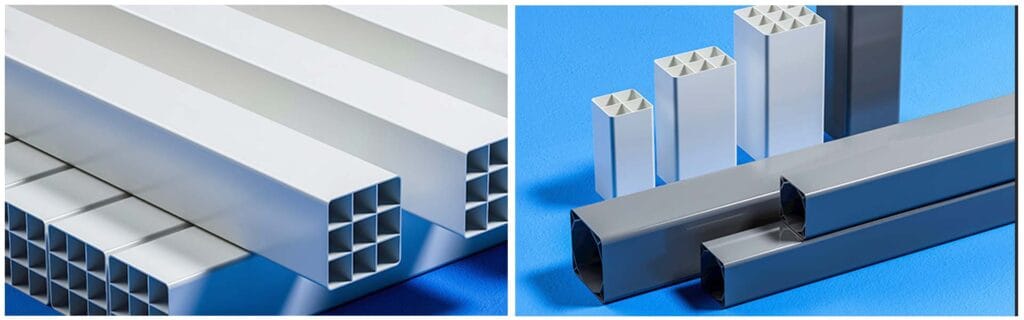
PVC vs HDPE Pipes
PVC Characteristics
- High rigidity
- Lower cost
- Excellent insulation
HDPE Characteristics
- Flexible structure
- Higher impact resistance
- Higher cost
Price Comparison Summary
| Material | Cost | Installation | Lifespan |
|---|---|---|---|
| PVC pipes | Low–Medium | Easy | 30–50 years |
| HDPE pipes | Medium–High | Moderate | 40–60 years |
Installation Cost Impact on Plastic PVC Pipes
Why Installation Affects Total Price
Socket Connection System Advantages
- No special tools required
- Faster installation (up to 30% efficiency gain)
- Lower labor cost
Installation Cost Breakdown
- Labor: 40%
- Excavation & backfilling: 30%
- Materials & connectors: 20%
- Miscellaneous: 10%
Case Study: Underground Cable System Project
Project Overview
A large urban telecom upgrade project used multi-hole PVC pipe systems for underground cable protection.
Project Scale
- Over 50 km pipeline network
- Multi-channel PVC system used
- Construction time reduced by 18%
Results
- Material cost increased by 10%
- Installation cost reduced by 25%
- Total project cost reduced by 12%
Procurement Strategy for Plastic PVC Pipes
Step 1: Define Application Environment
- Indoor → Light-duty PVC
- Building → Medium-duty PVC
- Underground → Heavy-duty PVC
Step 2: Lifecycle Cost Analysis (LCC)
LCC Components
- Initial purchase cost
- Maintenance cost
- Replacement cost
- Failure risk cost
Cheapest option is not always the most economical long-term choice.
Step 3: Verify Certifications
Ensure compliance with:
- ISO standards
- National building codes
- Electrical or telecom regulations
Common Mistakes in PVC Pipe Purchasing
Mistake 1: Only Comparing Unit Price
Focusing only on the lowest purchase price of plastic PVC pipes is one of the most common procurement errors in engineering projects. While a cheaper unit price may seem attractive initially, it often ignores hidden costs such as installation difficulty, maintenance frequency, and long-term replacement cycles.
In many cases, low-cost pipes use thinner wall structures or lower-grade PVC resin, which can reduce durability under pressure or environmental stress. Over time, this leads to higher total lifecycle costs, especially in underground or industrial applications where repair work is expensive and disruptive.
A more effective approach is to evaluate total cost of ownership (TCO), not just per-meter pricing.
Mistake 2: Wrong Application Matching
Another critical mistake is using the wrong pipe grade for the installation environment. For example, using light-duty plastic PVC pipes in underground cable systems or high-load trench environments significantly increases the risk of deformation, cracking, or system failure.
Each pipe type is designed for a specific engineering condition:
- Light-duty pipes → indoor wiring and low-stress environments
- Medium-duty pipes → building infrastructure systems
- Heavy-duty pipes → underground, road-crossing, and industrial use
Failing to match the pipe grade with real engineering conditions often results in premature system failure, higher maintenance costs, and even full pipeline replacement.
Mistake 3: Ignoring System Accessories
Many buyers focus only on the pipe itself and overlook the importance of system accessories such as connectors, sockets, plugs, and sealing components. However, in plastic PVC pipes systems, these accessories play a critical role in maintaining structural integrity and sealing performance.
Missing or low-quality fittings can lead to:
- Poor joint sealing and leakage risks
- Reduced mechanical strength at connection points
- Increased installation errors and misalignment
- Higher long-term maintenance requirements
A complete PVC piping system should always be evaluated as a full solution, not just individual pipe segments. High-quality accessories ensure system stability and significantly improve installation efficiency and long-term reliability.
Conclusion
The pricing of plastic PVC pipes is not just a material cost issue—it is a complete engineering system decision involving structure, standards, installation efficiency, and lifecycle performance.
A smart procurement strategy is not about choosing the cheapest product, but selecting the system that delivers the lowest total lifecycle cost while ensuring durability, safety, and installation efficiency.
Understanding these plastic PVC pipes price tips enables engineers and buyers to make data-driven decisions aligned with real project performance rather than short-term pricing comparisons.
FAQ
Why do plastic PVC pipes prices vary so much?
Because structure, thickness, and application standards significantly differ.
Are expensive PVC pipes always better?
Not always, but higher-grade pipes usually offer better durability and safety.
What is the lifespan of PVC pipes?
Typically 30–50 years depending on installation quality and environment.
Can PVC pipes be used underground?
Yes, but only heavy-duty or reinforced systems are suitable.
How can I reduce PVC pipe project costs?
Choose correct grade, optimize design, and reduce installation complexity.